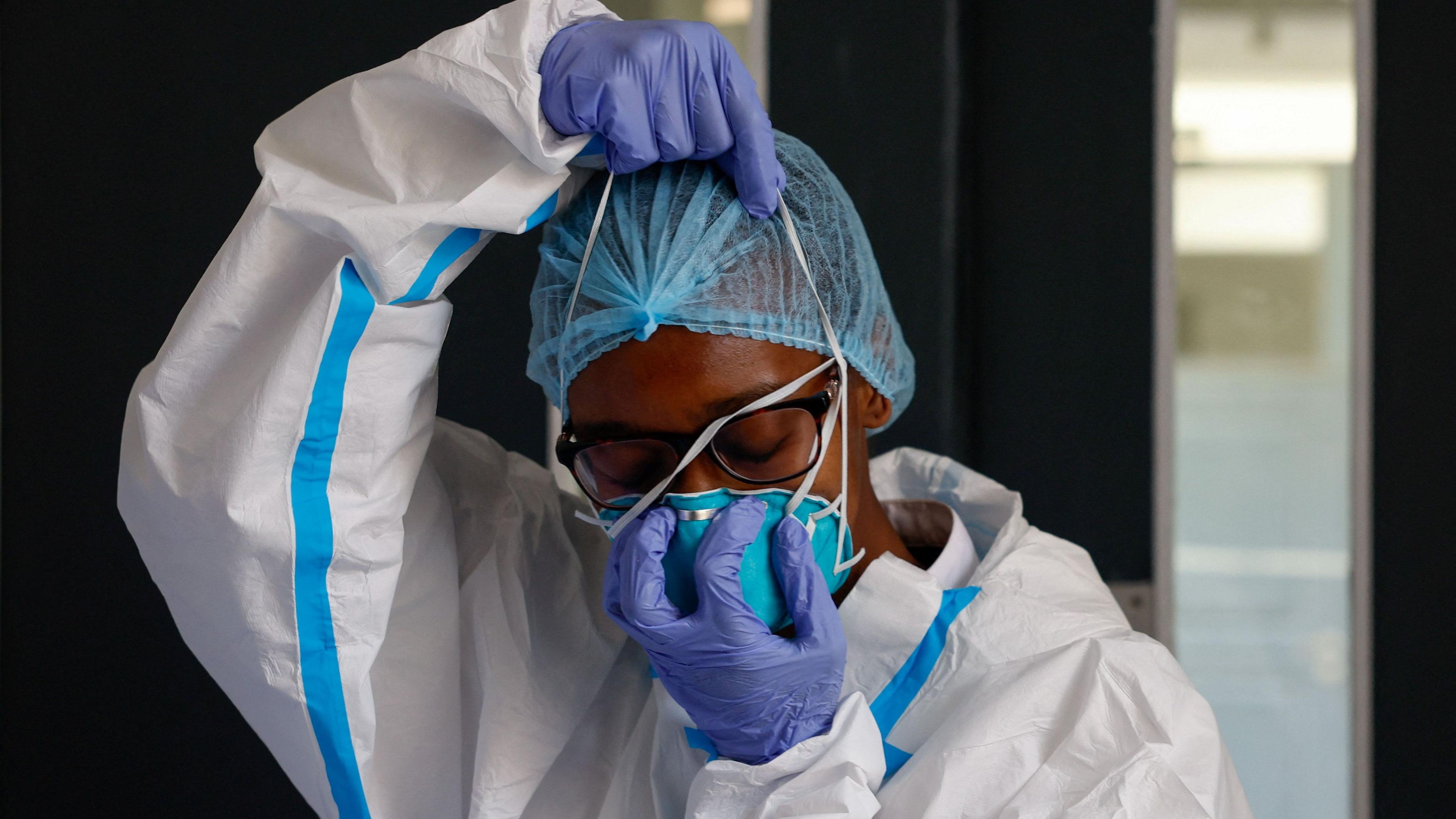
Kenya’s first confirmed Ebola case has sent shockwaves through the health sector, leading to the quarantine of ten people who had close contact with the patient who later died in Nairobi. Health authorities are now tracing an additional 57 contacts as investigations reveal the patient’s long‑distance travel through the Democratic Republic of Congo and Uganda before arriving at the Kenyan capital.
Key points
- Patient, suspected of being infected for a month, passed through multiple border points with no symptoms flagged.
- Ten contacts have been moved to a dedicated isolation facility and are under continuous medical observation.
- Officials are coordinating with the Africa Centres for Disease Control and Prevention (Africa CDC) to trace further contacts and assess transmission risks.
- President William Ruto’s office has announced intensified surveillance and the readiness of four major hospitals for handling potential Ebola cases.
- Calls for improved border screening, rapid diagnostic testing, and public health education are intensifying among experts and medical workers.
Kenyan health minister Aden Duale confirmed that the patient’s arrival at the Nairobi airport was overlooked because symptoms were masked by medication, a claim that underscores systemic gaps in screening procedures. The main hospital that treated the patient has now designated isolation wards, and more than 650,000 travellers have been screened with 267 samples tested to date.
The incident has reignited debates over regional cooperation. The Africa CDC’s chief has highlighted the need for joint response mechanisms across East Africa, noting that the patient’s route—Buta to Kisangani to Beni, then onto Uganda and finally Nairobi—demonstrated that no single screening point can guarantee containment. He added that while Kenya may be well prepared, other bordering countries must elevate their readiness and invest in diagnostic capabilities beyond temperature checks.
Looking ahead
Kenya is already upgrading its response infrastructure, with plans to transform a military base treatment facility into a dedicated infectious disease hospital once court approvals are secured. International observers are closely monitoring the situation, as the Dr. Kaseya’s statement that the patient was not detected highlights a broader challenge faced by many African nations when dealing with highly transmissible pathogens.