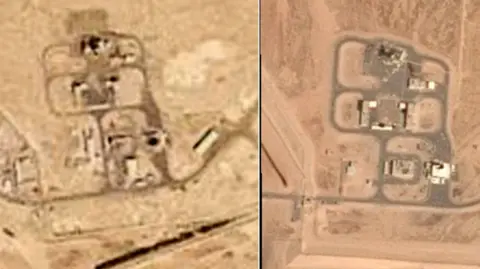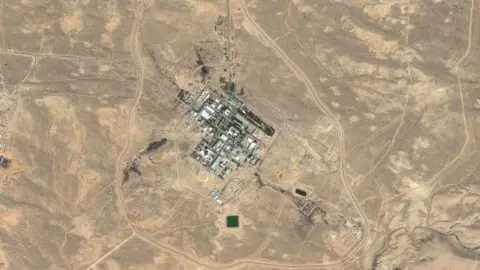
An Iranian missile strike has hit the town of Dimona in southern Israel, near to a nuclear facility. The International Atomic Energy Agency (IAEA) stated it was not aware of any damage to the nuclear research facility located about eight miles (13km) outside Dimona. Iranian state TV reported the strike as a response to an alleged attack on Iran's Natanz nuclear facility earlier that day. IAEA officials noted that 'no increase in off-site radiation levels' had been detected following the incident.
IAEA director general Rafael Grossi emphasized the need for 'maximum military restraint, particularly near nuclear facilities'. Israel's ambulance service reported treating 40 people after the Dimona strike, including 37 with mild injuries and a 10-year-old boy in serious condition. Another 68 individuals were treated following a separate attack in nearby Arad, with emergency responses stating that many victims suffered varying degrees of injuries.
Israeli authorities are currently probing how the missiles penetrated air defense systems, as both Dimona and Arad experienced interceptor launches that did not collide with their targets, ending in direct missile strikes on civilian areas. The Shimon Peres Negev Nuclear Research Center, colloquially known as the 'Dimona reactor', is believed to host Israel's undeclared nuclear arsenal. Officially, it is stated to be focused on research, but its existence is an open secret and an apparent target in the ongoing conflict.
Both Israel and the U.S. prioritize eliminating Iran's potential to develop nuclear weapons. Iran's Atomic Energy Organization (AEOI) condemned the alleged attack on Natanz as a violation of nuclear proliferation treaties, stating no radioactive leakage had occurred and that residents were safe. The tensions are further inflamed due to previous strikes on Natanz, which occurred during significant escalations in hostilities.