In brief
A recent discovery in Yakutia, Siberia, has unveiled the exceptionally well-preserved remains of a baby mammoth, dating back 50,000 years.
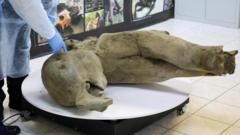
The bone-chilling conditions of Siberia have yielded a stunning paleontological find: the remains of a baby mammoth named "Yana," which were found buried in melting permafrost in the remote Yakutia region. Discovered by locals during the summer months, Yana is hailed as the best-preserved mammoth carcass ever uncovered, according to Russian scientists. Weighing over 100kg (15 stones) and measuring 120cm (4 feet) tall and 200cm long, this one-year-old mammoth was discovered in the Batagaika crater, the world’s largest permafrost crater. Researchers believe that its state of preservation is due to unique circumstances surrounding its burial, likely after it became trapped in a swamp, which protected it through the millennia.The discovery was serendipitous; local residents stumbled upon the mammoth as it thawed, allowing them to fashion a makeshift stretcher to lift it from the ground, as explained by Maxim Cherpasov, head of the Lazarev Mammoth Museum Laboratory. While some parts of Yana have been lost to modern predators, her head remains remarkably intact.Gavril Novgorodov, a researcher at the North-Eastern Federal University in Yakutsk, stated that studies are underway to determine the exact timing of Yana’s death. The region of Siberia has been a hotspot for similar prehistoric findings, revealing the ongoing thawing of permafrost attributed to climate change. In recent months, a mummified sabre-tooth cat and a 44,000-year-old wolf have also been discovered in the area, painting a vivid picture of ancient life in an ever-evolving environment.