In brief
During a visit to Le Porge, a town hit by one of France’s worst wildfire outbreaks, Prime Minister Sébastien Lecornu was met with boos from residents demanding transparency. The mayor’s office emphasised that the government had no hidden agenda in firefighting operations, and Lecornu announced €12 million in aid for the Gironde and Landes regions. Across Europe, wildfires have raged in Belgium, Spain, Greece and Croatia, prompting joint firefighting efforts and EU‑wide assistance.
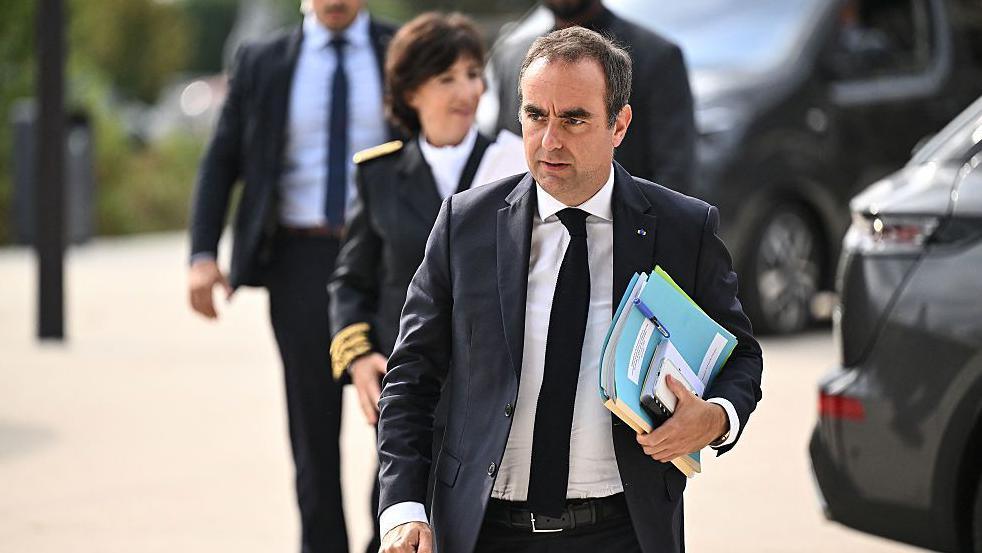
On Monday, French Prime Minister Sébastien Lecornu was heckled by a crowd of roughly 200 residents in the town of Le Porge, a hot spot for this year’s extensive wildfire disasters. The incident followed a meeting where 183 homes had been reported destroyed by the fires, leaving a trail of loss and displacement in the Gironde and Landes departments.
The resident group’s organiser, Ludivine Daurignac, claimed that the government was unwilling to meet with them, citing security measures such as riot police blocking their access. It appears that the mayor’s office contended that the government did not hide its actions during the fighting and that the Prime Minister’s priorities were clear.
In the same day, Lecornu announced €12 million (€10 million for Gironde and €2 million for Landes) to help local authorities launch rapid recovery projects and build a “recovery plan.” He also promised licence of equivalent reconstruction to replace homes destroyed by the blazes within a month, or even sooner, to cut delays for victims.
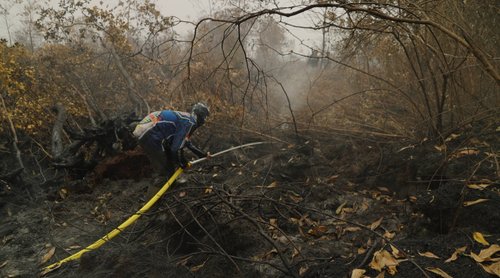
The fire damage in Le Porge follows a broader patch of blazes across Europe. The EU’s firefighting teams stationed in Belgium were hit by a large fire in the Hautes Fagnes nature reserve, which was described as the biggest blaze in the country’s recent history. Simultaneously, Greece’s wildfire service recorded 41 major fires, and the Greek authorities warned residents to follow fire prevention instructions.
In Spain, the Aragon region faced a severe blaze near the Peñas de Riglos surface, while a soldier tragically lost his life. Pyrapporting from Spain’s EU‑committed unit, 104 firefighters from France and 36 French vehicles were dispatched to support the local responders. Across Portugal, the borders with Spain continued to see heavy fire activity, prompting the European Commission to call for coordinated firefighting resources.
The situation in Croatia is not to be overlooked, with police arrests made on suspicion of deliberately starting fires at ten locations in Zadar. The Croatian fire chief described the recent blaze as one of the worst in the country’s history, forcing the evacuation of around 1,200 residents and tourists.
With this hot June‑July period marking the highest temperature span recorded in western Europe so far, experts warn that the continent remains vulnerable to further storm‑driven and human‑induced fires.