In brief
As affordability issues loom large for voters, several Democratic leaders, including Senators Chris Van Hollen and Cory Booker, are proposing significant tax cuts aimed at lower-income individuals. This strategic pivot reflects a response to prior successful Republican tax initiatives, though it poses risks to the party's broader economic goals. While aiming to assist working-class families, these plans could limit funding necessary to reverse previous tax cuts benefiting the wealthy and support new initiatives.
With voters’ concerns about affordability showing no sign of fading, some Democrats are rediscovering a traditionally Republican tactic for boosting financial relief for citizens: cutting taxes.
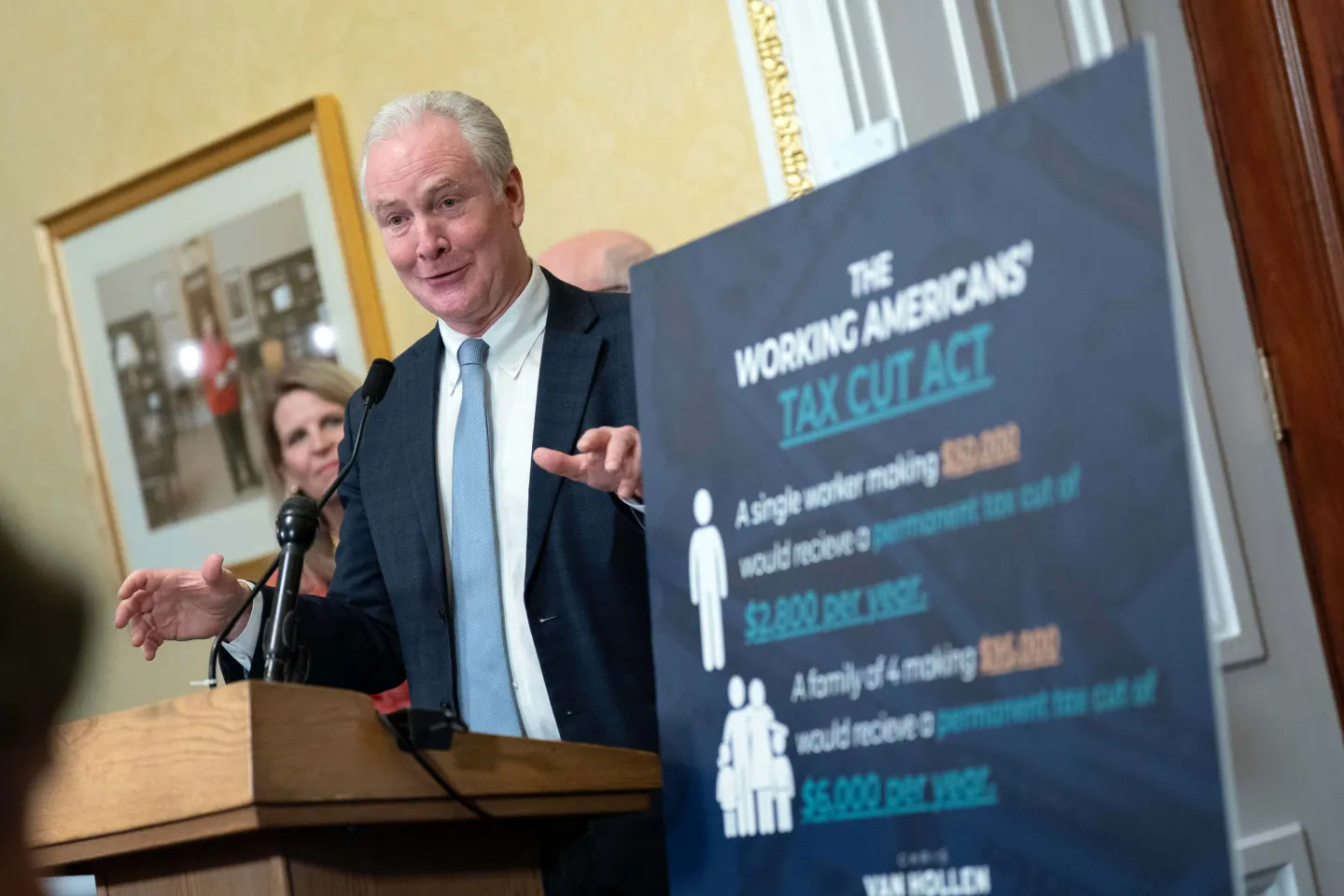
Sen. Chris Van Hollen of Maryland has put forth a proposal that aims to effectively eliminate the federal income tax for individuals earning $46,000 or less annually and to reduce tax rates for those earning up to approximately $60,000. Similarly, New Jersey Sen. Cory Booker is advocating for zero income tax on household earnings up to $75,000.
This shift is indicative of Democrats trying to revamp their public image, potentially mirroring strategies used by former President Donald Trump, who made headlines with slogans like 'no tax on tips' and 'no tax on overtime' during his campaign.
However, these tax revision proposals could jeopardize Democrats’ capacity to fund other pivotal objectives, such as reinstating Medicaid financing or reversing tax breaks for affluent individuals instituted during Trump's administration. Furthermore, limiting tax revenue impairs the party's ability to introduce new initiatives they often promise during elections.
Booker contests any parallels to Trump’s policies, stating he is addressing voter demands for stronger advocacy in their favor through ambitious tax reforms.
The proposals do not only appear at the federal level; they are also gaining traction in state races. For instance, former Atlanta Mayor Keisha Lance Bottoms has vowed to exempt public school teachers from state income taxes in her campaign for Georgia governor, while Rep. Katie Porter in California suggests families earning below $100,000 should be exempt from state income taxes, critiquing the Democratic approach as overly complex.
Recent history has shown that tax cut discussions were dominated by Republican platforms, prompting advocates like Van Hollen to reflect on early conversations he encountered in local barbershops about potential savings from tax cuts introduced by his party.
Notably, despite enduring criticism for being inefficient, Trump's tax ideas resonated with the electorate and highlighted a significant lesson for Democrats: tax cuts for the masses, even when unpopular with experts, can be popular among voters.
Looking ahead, Democrats are solidifying their focus on raising taxes on the ultra-wealthy to fund these new tax policies for lower-income residents. For instance, Van Hollen proposes a surtax on income exceeding $1 million, while Booker aims to raise the corporate tax rate nationally.
The implications of these tax cut strategies suggest a shifting political landscape while also stressing that benefits for the lower-middle class must not overshadow the tax burdens imposed on wealthier demographics.
Amid these discussions, it is significantly crucial for Democrats to balance financial relief with effective governance, ensuring they maintain public trust and support in an evolving economic discourse.