In brief
The Nippon Dynawave Packaging facility in Longview, Washington, suffered a major chemical explosion early Tuesday morning. At least one employee was killed and nine others are still missing; about nine injured people have been transported to hospital, including eight employees and a firefighter. The blast originated from a ruptured tank holding roughly 900 000 gallons of white‑liquor—a highly corrosive alkaline liquid used in paper production. Emergency crews are stabilising the unstable tank, but the site remains hazardous and search operations continue. No evacuation order was issued, and officials from both Washington and nearby California are coordinating response efforts.
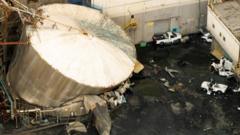
A sudden chemical incident at a long‑time paper‑making site in Longview, Washington, has left a community in shock. The Nippon Dynawave Packaging plant, which produces tissues, printer paper and other packaged goods, experienced a massive detonation at 07:15 PDT (15:15 GMT) on Tuesday. The blast erupted from a ruptured tank that carried white‑liquor—an alkaline liquid enriched with sodium hydroxide and sodium sulfide—used in bleaching and pulping. Estimates now suggest the tank held up to 900,000 gallons (3.4 million litres) of the corrosive substance, a tenfold increase over early predictions of 80,000 gallons.At least one worker was killed and nine people are still missing. A further nine injuries have been reported, with the injuries ranging from critical to minor, including burns and inhalation damage. In total, ten people—eight employees and a firefighter—were transported to nearby hospitals.The incident has forced authorities to employ additional federal assistance; Washington Governor Bob Ferguson indicated that state ecology workers are on site, and a fire‑rescue chief confirmed that the tank remains unstable, creating hazardous conditions for rescue teams.Despite the scale of the explosion, officials reported that the surrounding community does not face any threat that would require evacuation; the plant’s fire department and local police are urging the public to stay away from the site. Firefighters continue to reinforce the damaged structure before they can recover the remaining chemical inside the tank.This event echoes earlier incidents across the United States. For instance, California authorities recently dealt with a potential chemical-explosion threat at a plastic‑making tank in Orange County, ultimately declaring the risk eliminated after the emergency team secured the site.Longview’s plant, employing around 1,000 people, also suffered a large fire last July when piles of wood ignited and burned for days. The recent blast underscores the ongoing hazards inherent in the paper‑crafting industry and the importance of rapid emergency response and advanced safety protocols.As investigators continue to assess the scene, no identifying information about the injured or deceased will be released pending notification of families. A detailed update will follow once more facts emerge.