In brief
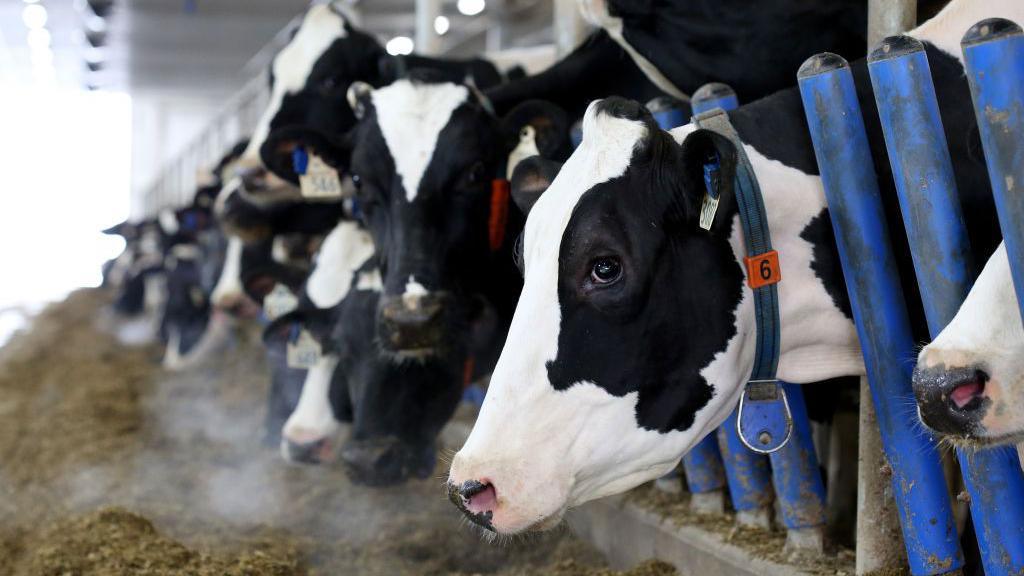
Donald Trump’s latest trade move threatens to impose a 50% tariff on $20 billion of Canadian dairy, eggs and poultry, citing Canada’s supply‑management policy as unfair to U.S. farmers. The policy, central to Canadian agricultural stability, has long been a political touchstone and a source of friction between the two nations. Canadian officials, including Quebec Premier Christine Fréchette and Trade Minister Dominic LeBlanc, have declared the system non‑negotiable. Despite strong public support for the system, a handful of critics argue that dismantling it could lower food prices and broaden trade. The tariff looming in August puts Canada’s dairy industry at a crossroads, forcing policymakers to weigh policy legacy against U.S. pressure.
John. Trump’s administration has announced a 50% tariff on $20 billion worth of Canadian dairy, eggs, and poultry, arguing that Canada’s supply‑management system unfairly protects its farmers at the expense of the U.S. market.
Supply‑management—enforced through quotas, price controls and import limits since the early 1970s—has long been a political bulwark for Canada. Politicians say it guarantees stable prices for consumers and supports rural communities across all provinces.
The tariff was justified in a White House order released Monday, which noted that Canada’s free trade agreement with the EU gives European producers an easier path to Canadian markets than U.S. firms, calling it discrimination.
In response, Quebec Premier Christine Fréchette called supply‑management non‑negotiable, while Trade Minister Dominic LeBlanc defended the system as a cornerstone of Canada’s economy.
Almost 77% of Canadians, polls say, want to keep the system, citing protection for local farmers and access to high‑quality dairy.
Opposing voices, including Alberta writer Jen Gerson and Consumer Choice Center director David Clement, argue the system inflates prices and fuels a cost‑of‑living crisis. They suggest that removing quotas would lower prices and give consumers more choice.
The Canadian dairy industry has a long track record of staging protests—often featuring tractors and cattle—on Parliament Hill when faced with potential concessions. Critics of the system claim public support stems from a lack of transparency and the political power of dairy lobbies.
The United States currently gets tariff‑free access to only 3.5% of Canada’s dairy market, even though Canada is a top importer of U.S. dairy output.
If tariffs become official in August, Canadian policymakers will need to decide whether to stand firm on supply‑management or risk the ire of a politically powerful lobby that stretches across all major parties.
While Australia gradually phased out quotas, making a temporary levy to fund the transition, and the EU increased quotas incrementally before abolishing them in 2015, Canada appears unlikely to dismantle its system any time soon.