In brief
The Austrian government has put into force a ban on hijabs and burqas in all public and private schools for children under 14. The policy, promoted by the coalition of the ÖVP, SPÖ and Neos, is framed as a step toward gender equality and protection of young girls. Critics argue it fuels anti‑Muslim sentiment and may be unconstitutional, while some teachers worry about the additional duty of enforcing. The Islamic Community will challenge the ban in court. The measure follows France’s long‑standing restriction on conspicuous religious symbols in schools.
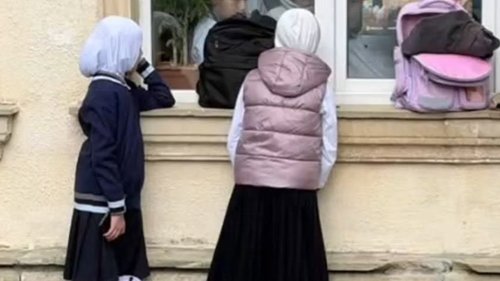
As Austria’s new school year begins, the country has implemented a law that bans traditional Muslim head coverings such as hijabs or burkas in all public and private schools for girls under the age of fourteen.
The measure, backed by the coalition of the Austria People’s Party, the Social Democrats, and the liberal NEOS, is presented as a commitment to gender equality and a defence of children’s rights.
Opposition from the Islamic Community points to the ban as an infringement on religious freedom, noting that it targets a specific cultural practice and risks marginalising the very students it claims to protect. Legal firms are preparing to challenge the ban before the Constitutional Court.
Teachers are instructed to confront the issue by engaging in dialogue with students and parents when a headscarf is detected; repeated violations could lead to child‑services involvement or, at worst, fines for guardians.
The policy has drawn criticism from various political groups. The Green Party accuses the Education Minister of placing policing responsibilities on teachers, while the far‑right Freedom Party calls the ban insufficient and proposes a wider prohibition on all religious head coverings. Austrian Chancellor Christian Stocker further insists on a clear stance against political Islam, claiming the nation should not live within an Islamic state.
Historically, France has prohibited conspicuous religious symbols in schools for more than two decades. Unlike the French model, Austria’s law specifically targets Muslim head coverings and excludes the full face veil such as the niqab.