In brief
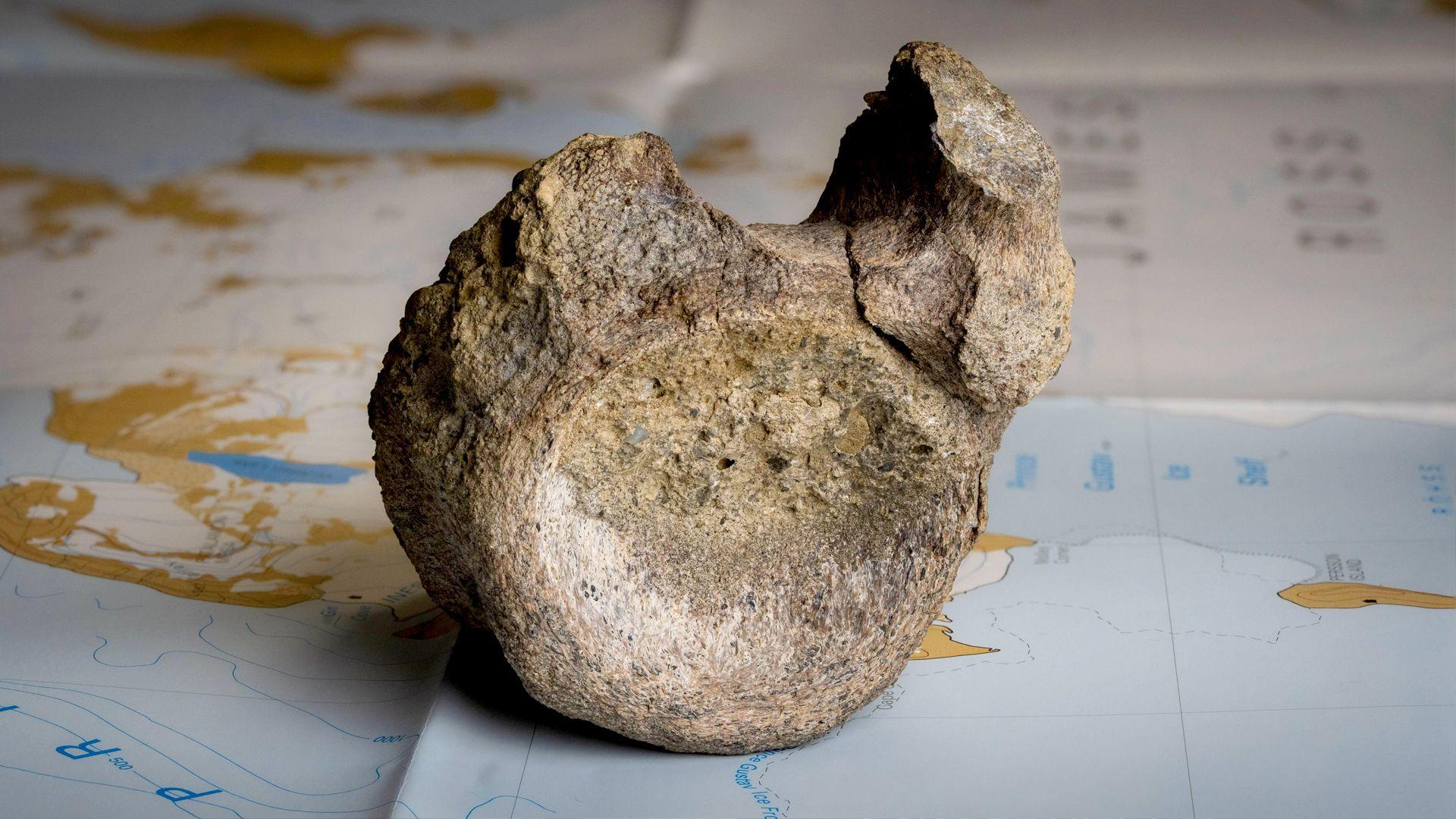
A fossil tucked away in a storage drawer at the British Antarctic Survey was rediscovered after four decades. Scientists now confirm it is a tail vertebra from a Titanosaur, the largest dinosaur group. This discovery marks the first dinosaur fossil ever reported from Antarctica and offers new insights into the continent’s Late Cretaceous ecosystems.
For almost 40 years a fossil lay forgotten inside a drawer at the British Antarctic Survey in Cambridge. In 1985 a team collected a fragment on James Ross Island that they could not identify and left it in the collection.
It was only discovered again in 2026 when Dr Mark Evans scoured the shelves of the geology collections. The specimen turned out to be a tail vertebra from a Titanosaur, a group that included the world’s largest dinosaurs.
Penned by Dr Mike Thomson in a field notebook, the bone was initially thought to belong to a marine reptile, but later paleontologists recognised its distinctly dinosaurian features.
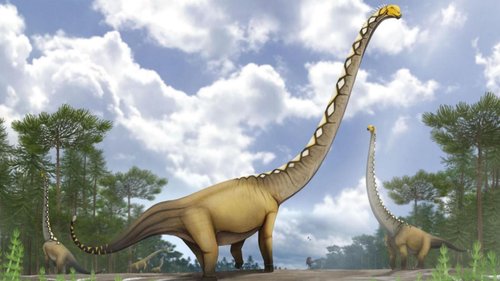
The find marks the first dinosaur fossil ever reported from Antarctica, a continent whose rock record has long been considered sparse. It suggests a smaller titanosaurs lived in a lush, forested Antarctica about 82 million years ago during the Late Cretaceous period.
Scientists estimate the Antarctic Titanosaur measured roughly 23 ft (7 m) in length. Dr Mark Evans and Prof Paul Barrett from the Natural History Museum confirmed that the vertebra’s shape is unique to Titanosaurs, helping to place this find in the broader context of ancient Antarctic ecosystems.
While the continent today is largely uninhabitable, this fossil demonstrates that it once supported massive plant‑eating creatures, offering new clues about how life thrived at the very bottom of the world 80 million years ago.