In brief
Researchers have uncovered a massive hilltop settlement, known as Brusselstown Ring, with over 600 houses, dating back to 1200 BC, potentially rewriting Ireland's urban history. This discovery points to a structured society that existed well before Viking influence, marking it as the largest prehistoric settlement in Britain and Ireland.
A recently discovered large hilltop settlement could challenge the theory that the Vikings built the first towns in Ireland, a researcher has said.
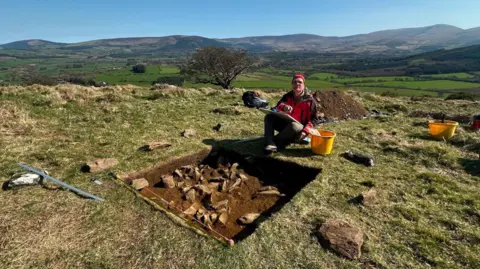
Dr Dirk Brandherm and his colleagues have identified more than 600 suspected houses in the Brusselstown Ring making it, to date, the largest nucleated settlement ever discovered in the entirety of prehistoric Britain and Ireland.
The settlement, which is thought to have emerged at about 1200 BC (the Late Bronze Age), is located within a region called the Baltinglass Hillfort Cluster in the south-western edge of the Wicklow Mountains.
It is among the 13 large hilltop enclosures spread across the mountain range where there are structures dating back to the Neolithic period and Early Bronze Age.
The findings were recently published within Antiquity, a peer-reviewed journal of world archaeology. The study states: Given its exceptional size, density of occupation and architectural complexity, Brusselstown Ring represents a unique case within both the Baltinglass hillfort cluster and more widely within the Atlantic Archipelago.
The available evidence indicates the settlement was occupied mainly during the Late Bronze Age, with continued use into the Early Iron Age. This makes Brusselstown Ring the largest nucleated settlement agglomeration by far in prehistoric Ireland and Britain.
Dr Brandherm, a reader in prehistoric archaeology at Queen's University Belfast, noted the significance of the large number and concentration of roundhouses found in the settlement, which contradicts previous assumptions that Bronze Age settlements were small hamlets.
This discovery redefines the historical narrative about the origins of urbanization in Ireland, positing that a significant proto-town existed almost 2000 years before Viking interaction.