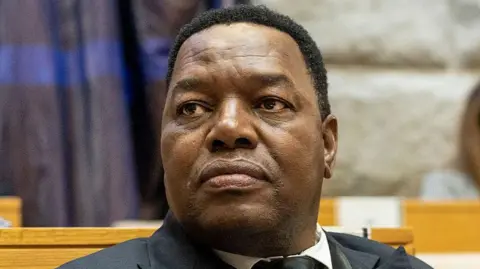
In Botswana, the looming national elections on Wednesday are shaking the decades-long dominance of the Botswana Democratic Party (BDP), which has maintained power since the nation's independence in 1966. The electoral landscape, traditionally framed by diamond wealth, now faces a notable shift due to a sharp global decline in diamond demand that has severely strained the nation's economy.
Botswana, celebrating its status as one of the world’s prominent diamond producers alongside Russia, recently witnessed what has been termed a “diamond crisis.” This downturn has amplified frustrations among the citizens, many of whom attribute their socioeconomic struggles to government mismanagement and corruption. Once celebrated as a burgeoning African success story with a strong reputation for democracy, Botswana now finds itself in a precarious position as voter trust in its leadership dwindles.
In a bid to regain support, President Mokgweetsi Masisi has tirelessly campaigned across the country's vast, sparsely populated landscape of 2.5 million people, presenting himself and the BDP as necessary agents of change. The irony does not escape many voters; Masisi has been at the helm for six years, while his political party has reigned for nearly six decades.
Public sentiment suggests a growing discontent with not only the economy but also the political tactics employed by the ruling party to secure their continued hold on power. As election day approaches, the narrative around diamonds morphs from a symbol of national pride into a potential catalyst for governmental change in Botswana. Voter priorities are shifting, leading to fears that the once-stable political landscape may become turbulent if the dissatisfaction with the BDP’s leadership is reflected at the ballot box.
Botswana, celebrating its status as one of the world’s prominent diamond producers alongside Russia, recently witnessed what has been termed a “diamond crisis.” This downturn has amplified frustrations among the citizens, many of whom attribute their socioeconomic struggles to government mismanagement and corruption. Once celebrated as a burgeoning African success story with a strong reputation for democracy, Botswana now finds itself in a precarious position as voter trust in its leadership dwindles.
In a bid to regain support, President Mokgweetsi Masisi has tirelessly campaigned across the country's vast, sparsely populated landscape of 2.5 million people, presenting himself and the BDP as necessary agents of change. The irony does not escape many voters; Masisi has been at the helm for six years, while his political party has reigned for nearly six decades.
Public sentiment suggests a growing discontent with not only the economy but also the political tactics employed by the ruling party to secure their continued hold on power. As election day approaches, the narrative around diamonds morphs from a symbol of national pride into a potential catalyst for governmental change in Botswana. Voter priorities are shifting, leading to fears that the once-stable political landscape may become turbulent if the dissatisfaction with the BDP’s leadership is reflected at the ballot box.