In brief
As cricketers navigated personal and communal strife, India's team finally set off to face legendary Australian captain Don Bradman, despite numerous challenges that threatened the tour's success.
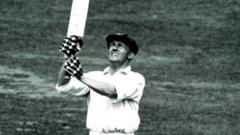
In 1947, India's first cricket tour of Australia emerged amidst the chaos of independence and partition. As the nation grappled with the consequences of its newfound freedom, including one of history's largest migrations and communal violence, the 16-member Indian squad was tasked with confronting the formidable Australian team led by the legendary Don Bradman. The turmoil at home cast a pall over the preparations as religious tensions flared between Hindus, Sikhs, and Muslims. Anthony De Mello, then-president of the Board of Control for Cricket in India, announced the squad against a backdrop of undivided India, asserting they would represent the nation in its entirety. Until this time, the Indian cricket team was known as "All India" and had only participated in three official Test matches in England from 1932 to 1946, suffering defeats in each series. The tide began to shift when future Australian captain Lindsay Hassett brought an Australian Services team to India in 1946. His encouragement following an unofficial series victory for India sparked hopes of an official Test series. Excitement grew amongst cricketers and fans alike as they prepared to take on Bradman’s renowned team, dubbed "The Invincibles," after their undefeated streak in England in 1948. The squad, captained by prominent batsman Vijay Merchant—with Mushtaq Ali as deputy—also featured noted players like Rusi Modi and promising fast bowler Fazal Mahmood. However, obstacles arose as Merchant and Modi withdrew from the tour due to health issues, and Ali stepped back after the tragic loss of his brother. Consequently, Lala Amarnath was appointed captain with Vijay Hazare as his deputy. As he endeavored to travel to Australia, Amarnath faced violence and sectarian threats in Punjab. A police officer’s recognition of his identity and a religious kada saved him from a violent mob. Meanwhile, Mahmood endured a near-death experience en route to Delhi when he was confronted on a train but was saved by former captain CK Nayudu. The Indian team prioritized training in Poona starting August 15, unaware that this was also the day of the partition announcement. Mahmood fought through threats and violence to join the training, yet, upon seeing the devastation in Lahore, he chose not to proceed with the tour, later becoming part of the Pakistani cricket team. Despite losing key players, India successfully completed the tour, although the team was ultimately defeated by Australia 4-0. This initially fraught tour of 1947-48 marks a significant moment in cricket history, highlighting the resilience of the players amidst such overwhelming national turmoil. Currently, India and Australia maintain a competitive rivalry, facing off nearly every two years—a testament to the enduring spirit of cricket that emerged amidst the shadows of a tumultuous past.