In brief
The article dives into the international dynamics and criminal organizations that drive the fentanyl crisis, outlining the roles of China, Mexico, and Canada in the drug’s supply chain.
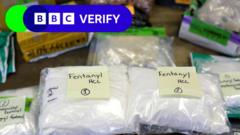
How does fentanyl enter the United States? This pressing question remains at the forefront of the opioid crisis, with President Donald Trump's administration placing the blame on various international entities. As part of ongoing trade tensions, Trump imposed tariffs on Chinese goods, arguing that China has not done enough to halt the export of chemicals that contribute to fentanyl production. The administration accuses Chinese companies of knowingly supplying chemicals used in manufacturing fentanyl, a synthetic opioid that has led to a surge in overdose deaths in the US. Responding to accusations, China imposed its own tariffs, escalating the trade conflict further.Beyond China, the US has called out Canada and Mexico for not sufficiently controlling the flow of fentanyl into its borders. Although Trump threatened tariffs against these nations, those plans were put on hold after securing some concessions regarding border security measures.The fentanyl epidemic has brought escalating repercussions in the US, where this powerful synthetic opioid has emerged as a leading cause of overdose deaths. Originally approved for medical use in the 1960s to treat pain, fentanyl became a clandestine menace as it’s increasingly mixed with other illicit drugs, often without users’ knowledge. Recent figures from the US Centers for Disease Control and Prevention (CDC) indicate over 74,000 Americans died from drug mixtures containing fentanyl in 2023 alone. A mere two-milligram dose can prove fatal, illustrating the drug’s potency and the risks posed to users.The trafficking of fentanyl has grown in complexity over recent years. The US Drug Enforcement Administration (DEA) attributes most fentanyl entering the country to Mexico-based criminal organizations, notably the Sinaloa Cartel. These groups use advanced tactics to smuggle the drug, sourcing precursor chemicals from Chinese suppliers. US Customs and Border Protection (CBP) reports that nearly all fentanyl seized—98%—is intercepted at the southwest border with Mexico, while a scant 0.2% comes through Canada. Mexican trafficking organizations cleverly conceal their shipments, using legitimate commercial goods and mislabelling containers as they cross borders.Amid these challenges, the Mexican government vehemently denies accusations of collusion with drug cartels, with President Sheinbaum denouncing such claims as false. In December, Mexico's security forces reported a record fentanyl seizure, highlighting ongoing efforts to combat the drug's infiltration.China remains the primary supplier of fentanyl's precursor chemicals despite implementing stricter drug laws in 2019. Nevertheless, traffickers exploit loopholes, acquiring chemicals that evade control to manufacture fentanyl.Research suggests that some Chinese companies knowingly sell chemicals intended for opioid production, often through encrypted channels and cryptocurrency. According to experts, these ongoing operations reveal systemic weaknesses facilitating the trade of legal products to criminal organizations.While China still leads in chemical sourcing, the DEA has also identified India as a rising player in the fentanyl supply chain. Two companies in India were indicted earlier this year for supplying essential manufacturing chemicals to the US and Mexico, complicating global efforts to tackle the crisis.On the Canadian front, Trump has pointed fingers at the country for allowing fentanyl to flow south across its borders. Despite 0.2% of fentanyl seizures occurring at the Canadian border, data indicates that organized crime in Canada is escalating its role in fentanyl production by importing critical chemicals and lab equipment from China.The intercontinental trade in fentanyl persists, as both US and Canadian authorities report seizures of the drug moving in both directions. Recently, Canada allocated a substantial budget aimed at curbing the fentanyl threat and enhancing its border security efforts.As fentanyl continues to ravage communities across the US, the global implications of this crisis necessitate urgent discussions and coordinated action among national governments.