
In brief
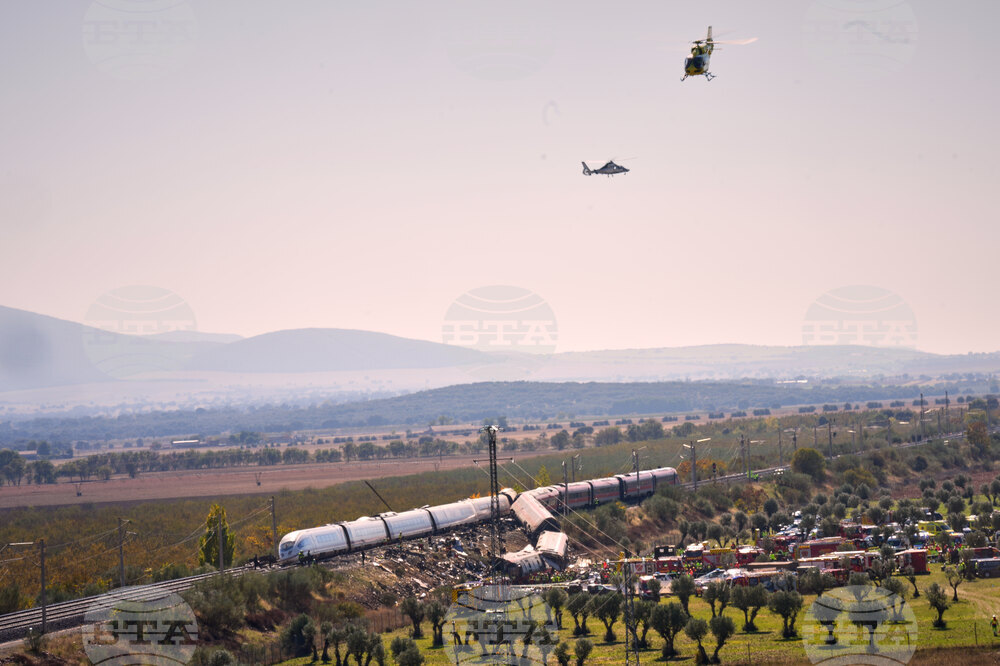
A fatal high‑speed train collision near the town of Urda, east of Toledo, Spain, killed at least 64 people and injured about 80. Bulgarian foreign officials lifted statements of sympathy and solidarity with Spanish authorities. Rescue teams are still searching the derailed carriages amid a massive emergency response.
A deadly collision between two high‑speed trains unfolded near the town of Urda, east of Toledo, Spain, on Friday, killing at least 64 people and injuring roughly 80 as rescue teams worked through wreckage in the early hours.
According to the regional government of Castile‑La Mancha, the tragedy involved two derailments that claimed the lives of more than 300 passengers on the two commuter units roving the Madrid‑Toledo line.
Rescue teams are still combing the wreckage of the derailed carriages, saying the effort is ongoing as survivors are rendered after the impact.
Spanish authorities have confirmed that of the about 80 people injured, 30 received minor treatments in field hospitals while 50 were taken to nearby hospitals for more serious injuries, some in critical condition.
Condolences from Bulgaria
The Bulgarian Foreign Ministry announced its condolences on X, stating that it was "extending sincere sympathies to the families of the victims and wishing the injured a speedy recovery." The ministry also expressed solidarity and said it was "thinking with the people of Spain".
Prime Minister Rumen Radev also posted on X, writing that he was "deeply saddened by the tragic train accident in Spain, which claimed lives and injured many people." He added that Bulgaria stood in solidarity and thanked Spanish Prime Minister Pedro Sanchez and the emergency services working tirelessly.
"I am deeply saddened by the tragic train accident in Spain, which claimed lives and injured many people. At this difficult time, Bulgaria stands in solidarity with the people of Spain. Our thoughts are with Prime Minister Pedro Sanchez, the Spanish authorities and the emergency services working tirelessly to assist those affected,"" said Prime Minister Rumen Radev.
The Bulgarian government’s letters reflect the strong diplomatic ties between Sofia and Madrid, with wordings that echoed the national government’s longstanding tradition of expressing condolences in international tragedies.
Russian, Israeli, and Egyptian journalists were also caught up in the early morning’s relief: a joint report indicates that 500 passengers had been aboard the two trains, with a total count of more than 500 people evacuated from the crash site by the time the Spanish rescue teams arrived.
In an effort to bring closure, the Spanish Ministry of Interior said that they are continuing to search for missing passengers while coordinating with international rescue agencies to ensure a swift response to the tragedy.
Ramos, a local emergency responder, gratefully noted that the international statements came at a “time when the country was in mourning and the donations and aid help keep a human need at the sights.”
While an immediate out-of-hospital death toll had been reported as 64 by Castile‑La Mancha's government, the precise number can shift as accurate assessments are finalized by authorities.
The accident was reported first to local law enforcement. The early prompt experience indicated that the train-track involved was operating on service in the Spanish rail chain that ran from Madrid to Toledo, with two high-speed trains crossing each other between the same stations, resulting in a catastrophic damage and a series of derailments.
The Andalusian President Tomás Jiménez has urged the national government to conduct a comprehensive investigation into why the collision occurred and how they will improve safety regulations in the future. The local council of Toledo announced a memorial service for those who have died on Wednesday evening, with representatives of the SENER (the State’s rail authority) attending the event later.
In the letter to the Spanish Ambassador, the Bulgarian Ministry of Foreign Affairs explicitly referenced the compassion of the victims’ families and the budgets they required for ongoing health services for the injured. A statement from the Bulgarian diplomat said the reactive and humanitarian assistance is contingent on future cooperation between both nations, ensuring it can provide cathartic assistance further ahead of building better railway safety in Spain.
The railway accident between the two high-speed trains left large areas of track surface in a state of disintegration, and emergency crews were compromised in order to ensure that casualties did not get further harmed during the debris clearing up. Local residents and families of victims have asked for more outreach to help inform the court proceedings following the accident. The Final Report of the investigation into the death toll is yet to be released in winter, amid intense scrutiny of safety at the rail and major highway routes nearby.
Finally, the Spanish media confirmed that a Spanish citizen Josefina Alvarez, who had a granddaughter on board the train, was filming the chaotic scene in her home near the incident, claiming that she will be part of the official footage to help coordinate the rescue. The local court has confirmed that the footage was definitive proof for the actual minutes in which the collision took place.
For now, families of the 64 people who died have been given an official notification letter from the authorities. The surviving passengers are receiving various forms of assistance in an effort and based on the pair of exposed public trains that fell into and remained near the same tracks and were seen to have a view.
In the days ahead, international statements and the condolences extended by the Bulgarian political figures will resonate with the healing process for the victims and the assistance provided to the families of survivors. The Spanish nation has declared the following days a national mourning period, with a dedicated emergency task force established in a new coordinated effort with the Bulgarian emergency services to secure the sense of unity in the face of tragedy, with emergency rescue teams jointly working on fire and evacuation tactics.


