In brief
Tanzania unveils its first electric railway, drastically reducing travel times and enhancing passenger comfort between its largest city, Dar es Salaam, and the capital, Dodoma. The ambitious project, part of a broader 2,560 km Standard Gauge Railway initiative, aims to connect Tanzania with its neighbors and improve economic prospects while providing a modern travel experience.
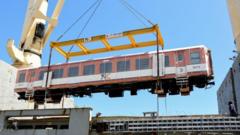
In a dazzling architectural feat, Tanzania has opened a new electric railway terminal in Dar es Salaam, setting the stage for a revolutionary approach to regional transportation. Inspired by the country's rare tanzanite gemstone, the terminal is a testament to Tanzania’s aspirations in transport development. The vibrant, glass-faced structure reflects the lively spirit of this burgeoning nation, heralding the arrival of a sleek electric train service that propels passengers from Dar es Salaam to Dodoma in under four hours—half as long as the road journey. This recent development is part of a monumental 2,560 km (1,590-mile) Standard Gauge Railway (SGR) project, intending to connect major cities and enhance trade ties with neighboring countries, including Burundi, Rwanda, and the Democratic Republic of Congo. The 460 km (285-mile) section from Dar es Salaam to Dodoma, which opened in August, is seen as vital for fostering economic connections, with President Samia Suluhu lauding it as "a pathway to our future."Dodoma's station complements the region's mountainous landscape with its distinct design, creating a seamless blend between modern infrastructure and Tanzania's natural heritage. Despite being the nation's capital for 50 years, the city has been slow to gather commercial momentum. This efficient transport link is set to change that narrative, providing vital connectivity.Passengers enjoy a more luxurious experience with reclinable seats, onboard refreshments, and a clean environment, starkly contrasting with the older railway service. Popular demand has surged with more than 7,000 travelers utilizing the eight daily train services, leading officials to consider increasing the frequency as tickets sell out days in advance.Despite the enthusiasm surrounding the new service, passengers must navigate an airport-like security protocol before boarding, a precaution met with mixed feelings among travelers. With a maximum speed of 120 km/h (75 mph), the train offers stunning views of Tanzania’s countryside, promoting an enjoyable travel experience.Yet, the transformation hasn't come without challenges. Although the initial groundbreaking of the SGR began in 2017, delays due to various factors like the COVID-19 pandemic and financial constraints have hindered progress. The overall project is estimated to cost $10 billion, drawing international investment from entities like the Chinese Exim Bank and the African Development Bank. The railway’s operator, Machibya Masanja, emphasizes that while profitability will be evaluated once the full network is complete, current passenger numbers are sufficient to offset operational expenses. They are also working to eliminate potential power outages by establishing a dedicated electricity line, enhancing the service's reliability.However, not everyone benefits equally from this progress. Local bus services in Dodoma report significant drops in passenger numbers, thereby affecting their livelihoods. Despite this, many recognize the broader societal benefits of the railway, which provides faster and more comfortable travel for the majority.As Tanzania’s new railway ventures into a promising future, it stands as a pioneering model for transportation across East Africa, culminating in improved regional ties and enhanced travel experiences for its citizens.