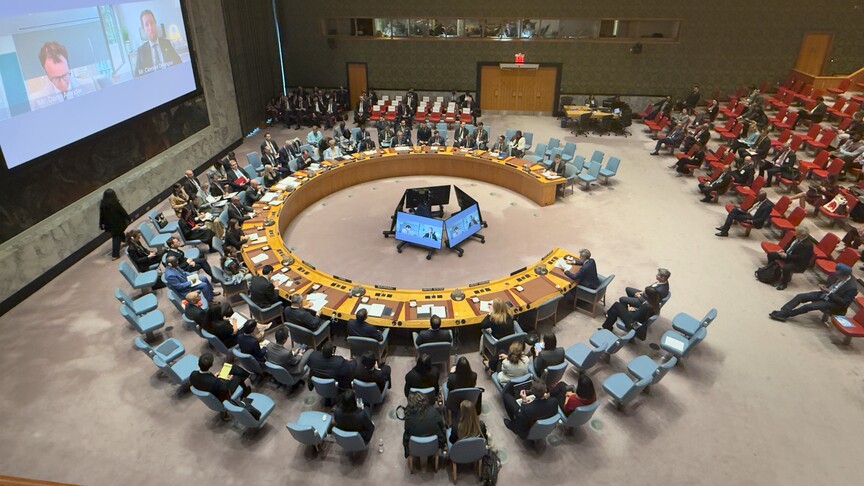
On Thursday, Nov. 5, 2026, the United Nations Security Council convened in Geneva to hold its eighth informal straw poll on candidates to succeed Secretary‑General Antonio Guterres. The vote was conducted behind closed doors, with each member state’s representative submitting a ballot that could indicate "encouraged," "discouraged," or "no opinion expressed." Those who were to be informed of the outcome would receive the results via their respective permanent representatives; the General Assembly president was also notified that the poll had taken place, according to Latvia’s ambassador Sanita Pavluta‑Deslandes, who was chairing the session under her country’s rotating presidency of the council for the month.
According to Pavluta‑Deslandes, the Security Council requires a nominee to secure at least nine "encouraged" votes and avoid any "discouraged" votes from the five permanent members in order to win the council’s recommendation for appointment by the General Assembly.
The poll saw eight candidates in the running. They included former Ecuadorian minister and diplomat Ivonne A‑Baki, former Ecuadorian foreign minister and defense minister Maria Fernanda Espinosa, Argentine nuclear regulator Rafael Grossi, the Dominican Republic’s lawyer Carlos P., the former UAE diplomat and former ambassador to the United Nations Lana Nusseibeh, Turkish former foreign minister Feridun Hadi Sinirlioglu, and, most prominently, former Costa Rican vice‑president Rebeca Grynspan.
The front‑runner for the poll, as reported by Xinhua, is Rebeca Grynspan of Costa Rica, "a former vice‑president of Costa Rica," whose name has appeared on ballots with the highest number of "encouraged" votes.
The Security Council’s straw polls are informal, closed‑door ballots; their results are not publicly released. Nevertheless, the council’s internal tally in this eighth round is the key indicator that will shape the General Assembly’s candidate recommendation ahead of the Jan. 1, 2027 inauguration of the next Secretary‑General.
The process is part of a long-running selection mechanism that has seen previous rounds of scrutiny and adjustment. Earlier iterations of the straw poll, such as the sixth on Oct. 16, used color‑coded ballots to distinguish permanent from non‑permanent member votes. Subsequent rounds, including the seventh on Oct. 30 and the eighth on Nov. 5, returned to undifferentiated ballots as new candidates entered the race.
The poll itself, though secret, has drawn attention from media and diplomatic circles. Analysts note that the presence of a wide range of former ministers, diplomats, and international agency leaders reflects the breadth of the UN’s considerations at this transition. The international community will now watch closely as the General Assembly prepares to nominate the next Secretary‑General based on the Security Council’s recommendation, which is expected to be made in early 2027.
Beneath the procedural details of voting, the proceedings underscore the continued importance of the Security Council’s role in shaping the leadership of the United Nations. As global affairs evolve and new challenges arise, the selection of the next Secretary‑General remains a high‑visibility event that signals the UN’s direction for the coming years.
Security Council Holds Eighth Straw Poll for Next UN Secretary‑General
The UN Security Council voted informally on potential successors to Secretary‑General Antonio Guterres in Geneva, with Rebeca Grynspan of Costa Rica emerging as the frontrunner.
By WorldVoice 360Source: english.news.cn2 min read