In brief
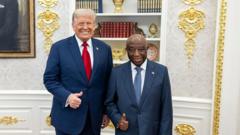
As President Trump lauds Liberia's leader for his "good English," it's essential to explore the country’s founding by freed American slaves, its American-influenced culture, and notable figures like Ellen Johnson Sirleaf.
Liberia boasts a fascinating history intertwined with the United States, underlined by its establishment by freed African-American slaves in 1822. President Donald Trump's recent praise for Liberian President Joseph Boakai's command of English offers a chance to delve deeper into the West African nation’s distinctive features shaped by its American roots. Here are six critical aspects about Liberia:1. **A Nation of Freed Slaves**: Liberia, proclaimed independent in 1847, was populated by freed African-Americans and those liberated from transatlantic slave ships. The country retains a legacy of American heritage, with a significant impact on its culture and political landscape. Approximately ten of Liberia's 26 presidents have had roots in the US, illustrating a sustained American influence. Americo-Liberians, descendants of these freed individuals, dominated the nation's leadership until the 1980 coup, which marked the end of their political hegemony.2. **Capital Named for a US President**: The capital city, Monrovia, is named after U.S. President James Monroe. Monroe championed the American Colonization Society, which facilitated the resettlement of freed African-Americans. The architectural style of Monrovia and the naming of numerous streets reflect its historical connection to America.3. **Flags with Similar Designs**: The Liberian flag closely resembles the American flag, featuring 11 red and white stripes and a blue field with a white star. This design symbolizes Liberia as the first independent republic in Africa, contrasting with the American flag, which has 13 stripes and 50 stars.4. **A Famous Football Legacy**: Timothy Weah, son of former President George Weah and American by birth, has emerged as a notable footballer, playing for Juventus and the US national team. His father, a football legend, holds the distinction of being the only African winner of the Ballon d'Or.5. **Historic Leadership**: Liberia made history with Ellen Johnson Sirleaf, who became Africa’s first elected female president in 2005 post-civil war. A Harvard graduate, her leadership earned her a Nobel Peace Prize in 2011 for her advocacy of women's rights.6. **Rubber Industry Controversies**: Liberia houses the world's largest rubber plantation, established in 1926 by Firestone Liberia. Despite providing significant employment, the company has faced accusations of human rights abuses, as noted by a UN report linking these issues to the broader challenges within Liberia’s rubber industry.Liberians have offered varied reactions to Trump's comments. Foreign Minister Sara Beysolow Nyanti emphasized the linguistic similarities stemming from Liberia's unique history. Meanwhile, Liberians express concern over global perceptions of Africa, with varying opinions on the implications and understanding of Trump's comments. Regardless, Liberia’s multifaceted heritage and its ties to the US deserve recognition beyond clichés.