In brief
Dr. Wissam Sukkar, a GP in Gaza, narrates the harrowing realities faced by medical professionals and patients, stressing the collapse of the healthcare system and the bleak conditions of displaced families.
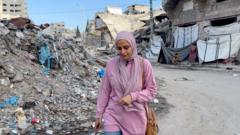
In a poignant account of her daily life, Dr. Wissam Sukkar, a dedicated physician at a Médecins Sans Frontières (MSF) clinic in Gaza, shares the challenges she faces as the region endures its 18th month of conflict between Israel and Hamas. Beginning her day at 7:30 AM in Gaza City, Dr. Sukkar navigates the desolate streets, often walking for nearly an hour to reach the clinic, as the fuel scarcity limits transport options. She emphasizes the plight of her team, committed to providing critical services despite a disastrous healthcare landscape.With only 21 out of Gaza’s 36 hospitals functioning, the United Nations’ World Health Organization reports alarming shortages in medical supplies due to a blockade imposed by Israel. Dr. Sukkar reflects sadly on the remnants of her previous place of work, a burns clinic established by MSF before it was devastated in conflict-related bombardments.As she dons her white coat around 9:30 AM, the clinic is already bustling with patients —around 150 people waiting in a tent for medical attention, many of whom are displaced as fierce violence escalates following the collapse of a recent ceasefire. The situation has exacerbated the rates of malnutrition and disease amongst the vulnerable, particularly the elderly and children.Throughout her shift, which culminates at 3:30 PM, the clinic sees an overwhelming influx of patients, with notable cases of respiratory and gastrointestinal infections. The dire necessity for basic healthcare resources is evident as Dr. Sukkar laments the deepening crisis, explaining that the healthcare system’s collapse leaves many complicated cases without referral options.Recent Israeli airstrikes, notably targeting al-Ahli Arab hospital —the main trauma care facility in northern Gaza— have intensified the need for support, with an influx of critically wounded individuals now relying on MSF's clinic for care. The haunting stories of patients, like Saeed Barkat —who was injured in an artillery strike— highlight the personal toll this conflict has taken on the community.As the day unfolds, the clinic's sparse pharmacy shelves underscore the severity of the crisis; essential medicines are sorely lacking. Dr. Sukkar expresses worry over nutrition and clean water for her children while calling attention to the reality that medical supplies are running out at an alarming pace.“This is so hard that I often feel we will not make it through the week with what little we have left,” Dr. Sukkar remarks. With the enduring stress weighs heavily, she carries home the burden not just of her patients, but of her own family’s precarious situation, mirroring that of countless others in Gaza.Returning home after a lengthy and exhausting day, Dr. Sukkar contemplates the persistent challenges of life in Gaza. The absence of hope is palpable in her reflections: “I feel like I live in a nightmare that doesn’t end,” she confesses, questioning when this relentless war will finally give way to peace. For many, like Dr. Sukkar, the echoes of despair remain amidst a search for relief and normalcy.