In brief
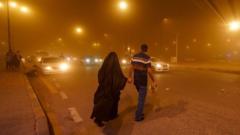
A fierce sandstorm sweeping through central and southern Iraq has caused health officials to report over 1,000 respiratory cases, primarily in the Muthanna province. Local authorities confirmed around 700 instances of suffocation, accompanied by footage depicting the region engulfed in an orange haze, resulting in power outages and disrupted flights.
Dust storms, common in Iraq, are increasingly growing in intensity, a trend experts attribute to climate change effects. The country’s environment ministry has cautioned that such "dust days" will likely become more frequent in the near future. With many people adopting face masks for protection, hospitals have faced surges in demand, particularly in Muthanna, Najaf, Diwaniyah, Dhi Qar, and Basra provinces, where visibility plummeted to under one kilometer. Despite the current challenges, local weather forecasts suggest conditions are set to improve by Tuesday morning. The UN identifies Iraq as one of the top five nations vulnerable to climate change, leading to recurring sandstorms, intense heat, and dwindling water resources. Iraq's environment ministry warns of a future filled with more of these hazardous dust storms. Previous experiences, such as a severe storm in 2022, resulted in one fatality and over 5,000 individuals requiring medical assistance for respiratory issues. Authorities continue to monitor the situation closely as they prepare for possible future events related to the increasingly erratic climate.