In brief
The beloved blue homes in Jodhpur's Brahmapuri neighborhood, emblematic of the city's heritage, face deterioration due to rising temperatures, changing building techniques, and dwindling indigenous resources, prompting local activists to take action.
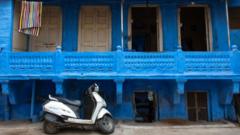
Jodhpur, once celebrated for its striking azure-hued homes, is witnessing a gradual disappearance of the iconic blue that has defined the city's image for centuries. The Brahmapuri neighborhood, marked by its blue structures, sits under the shadow of the historic Mehrangarh Fort, developed in 1459 by Rajput king Rao Jodha. Jodhpur, known as the 'Blue City', has drawn fascination not only from locals but also international tourists enamored by its vibrant aesthetics.Esther Christine Schmidt, an assistant professor from Jindal School of Art and Architecture, notes that the adoption of blue in Brahmapuri's architecture likely took root in the 17th Century, becoming a visual emblem of the locality. As Sunayana Rathore, curator of the Mehrangarh Museum, points out, Brahmapuri remains the heart of Jodhpur, despite the city's urban expansion in recent decades.The neighborhood was initially constructed as a settlement for Brahmins, who painted their homes blue as a reflection of their cultural identity within the Hindu caste hierarchy. On a global scale, Brahmapuri is often compared to the blue city of Chefchaouen in Morocco, known for its similarly colored buildings, which were historically linked to Judaism and the search for refuge.However, increased temperatures and changing environmental conditions are causing the blue pigment to fade. A significant contributor to this issue is the scarcity of natural indigo, which had once been plentiful in nearby regions. This change, alongside rising temperatures, is making it harder for the traditional blue paint to keep homes cool, prompting residents to shift towards modern conveniences such as air conditioning.Udit Bhatia, an assistant professor at the Indian Institute of Technology in Gandhinagar, explains that average temperatures in Jodhpur have risen over the decades, exacerbating the heat island effect prevalent in urban areas, where concrete and darker paints trap heat. In contrast, historical building methods, which included lime plaster, are being neglected in favor of modern materials like concrete that do not reflect the traditional hues.While some residents, like civil engineer Aditya Dave, retain the blue color in their homes, many opt for alternatives as the costs of preserving the iconic blue have skyrocketed from 5,000 rupees to over 30,000 rupees in recent years due to dwindling natural resources and changing urban landscapes.Local garment seller Deepak Soni expresses dissatisfaction with the trend of abandoning historic colors, arguing that it diminishes the city's appeal to tourists seeking its unique charm. In response, he has championed efforts to restore blue to Brahmapuri, persuading thousands of homeowners to repaint their outer walls and roofs. His initiative aims to ensure that when visitors capture images in the area, the distinctive blue backdrop is still visible.Currently, an estimated half of Brahmapuri's 33,000 homes retain their blue hue, reflecting ongoing activism to preserve Jodhpur's unique heritage as it struggles against the pressures of modernization and climate change. Local officials are collaborating with community leaders to explore traditional techniques like lime plastering to further revive the dying blue pigment.Determined to maintain the soul of their city, locals are rallying to safeguard Jodhpur's identity. As Soni passionately states, the responsibility to cherish and preserve their heritage rests on the communities themselves, ensuring that Jodhpur continues to be recognized for its vibrant, historical character.