The political landscape of Mozambique is stirring as both leaders navigate a path towards reconciliation and potential collaboration.
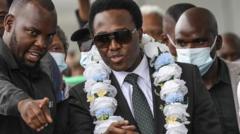
In a groundbreaking development in Mozambique's political crisis, opposition leader Venâncio Mondlane has revealed his willingness to join President Daniel Chapo’s government under specific conditions aimed at resolving the unrest that followed the disputed elections in October. The revelation came during separate interviews with the BBC, where both leaders suggested a possible rapprochement after the violent aftermath of the electoral process, which resulted in approximately 300 fatalities.
After declaring himself the "people’s president" following a contested electoral result, Mondlane has remained adamant that the elections were manipulated. Although the country's highest court ruled in favor of Chapo, affirming a 65% vote for him, Mondlane continues to call for significant reforms, including the unconditional release of around 5,000 detained individuals from protests, compensation for the victims of police violence, and medical treatment for those injured.
Chapo, who officially assumed the presidency in January, acknowledged the need for an inclusive governance model and reforms to address electoral laws and human rights issues. He conveyed that his administration is currently consulting with other opposition parties and broader societal segments to strategize on establishing a reformist government.
Both leaders project a willingness to engage in constructive dialogue, with Mondlane noting, "Yes, if he has a genuine interest to work with me." Chapo responded by indicating that any decision regarding Mondlane's inclusion in the administration would depend on the assessment of qualifications, competencies, and patriotic merit.
As the nation stands at a critical juncture, Chapo aims to not only foster national unity but also stimulate economic growth, particularly targeted at engaging the country’s youth. This sentiment resonates with Mondlane's appeal among younger voters, which was pivotal during the election campaign, where he championed the message of reclaiming Mozambique.
It remains to be seen whether this developing political dialogue will successfully navigate the uncertainties of Mozambique’s current situation and lead to a more stable environment for all Mozambicans.
In a groundbreaking development in Mozambique's political crisis, opposition leader Venâncio Mondlane has revealed his willingness to join President Daniel Chapo’s government under specific conditions aimed at resolving the unrest that followed the disputed elections in October. The revelation came during separate interviews with the BBC, where both leaders suggested a possible rapprochement after the violent aftermath of the electoral process, which resulted in approximately 300 fatalities.
After declaring himself the "people’s president" following a contested electoral result, Mondlane has remained adamant that the elections were manipulated. Although the country's highest court ruled in favor of Chapo, affirming a 65% vote for him, Mondlane continues to call for significant reforms, including the unconditional release of around 5,000 detained individuals from protests, compensation for the victims of police violence, and medical treatment for those injured.
Chapo, who officially assumed the presidency in January, acknowledged the need for an inclusive governance model and reforms to address electoral laws and human rights issues. He conveyed that his administration is currently consulting with other opposition parties and broader societal segments to strategize on establishing a reformist government.
Both leaders project a willingness to engage in constructive dialogue, with Mondlane noting, "Yes, if he has a genuine interest to work with me." Chapo responded by indicating that any decision regarding Mondlane's inclusion in the administration would depend on the assessment of qualifications, competencies, and patriotic merit.
As the nation stands at a critical juncture, Chapo aims to not only foster national unity but also stimulate economic growth, particularly targeted at engaging the country’s youth. This sentiment resonates with Mondlane's appeal among younger voters, which was pivotal during the election campaign, where he championed the message of reclaiming Mozambique.
It remains to be seen whether this developing political dialogue will successfully navigate the uncertainties of Mozambique’s current situation and lead to a more stable environment for all Mozambicans.