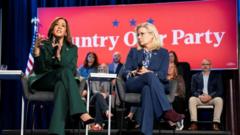
Kamala Harris dedicated Monday to engaging with independent and Republican voters across the Democratic Party's pivotal "blue wall" states—Pennsylvania, Michigan, and Wisconsin—two weeks ahead of the election. Harris's unique approach this time involved a series of "town hall" discussions alongside Liz Cheney, an anti-Trump Republican renowned for her critical stance against the former president.
Departing from the usual rally-style events, the Harris-Cheney partnership included dialogues led by prominent figures from the opposing side, such as Republican pollster Sarah Longwell in Pennsylvania and conservative commentator Charlie Sykes in Wisconsin. Joined by Maria Shriver in Michigan, the choice of location for these discussions was strategic, targeting suburban counties known for their college-educated, traditionally Republican citizens who have recently shown a drift toward Democratic candidates.
This shift reflects the evolving dynamics of support for both major parties amidst the influence of Donald Trump, as various demographic groups reassess their political alignments. Republican strategist Craig Snyder noted that while outreach to disaffected Republicans is essential, these voters express a desire to hear from fellow Republicans rather than solely from Democrats.
During the events, Cheney conveyed a reassuring message to Republican voters considering a break from Trump, emphasizing their "right to vote with their conscience." Harris corroborated this sentiment, sharing anecdotes of Republicans who privately supported Cheney's stance.
The audiences at these venues appeared to consist largely of undecided voters and Republicans, with their reactions suggesting a shared understanding of the issues raised. Testimonies from attendees, such as Wisconsin retiree Dan Voboril, expressed growing concern with the current political climate and an openness to supporting Harris.
Throughout the discussions, questions were designed to let Harris articulate her campaign topics, including a query about in-home nursing care for seniors, to which she responded with her government-backed plan. Other subjects included US involvement in Ukraine and persistent issues surrounding reproductive rights, allowing both Cheney and Harris to express their views on the direction of Republican policies.
With current polling indicating a competitive race nationally and within these crucial battleground states, the Harris campaign appears focused on minimizing potential Trump support. Surveys suggest minimal crossover among Republicans, but if Cheney's assertion about hidden Republican voters rings true, Harris could find a smoother path toward the presidency.
Through this concerted effort, the Harris campaign aims to capitalize on any vulnerabilities in Trump's base and galvanize Republican support ahead of a critical election outcome.