In brief
The iconic cathedral's revitalization includes reconstruction of its spire, cleaning of stonework, and restoration of unique artifacts.
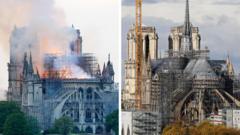
In an exclusive televised tour, French President Emmanuel Macron unveiled the impressive restoration of Notre-Dame Cathedral, offering a first glimpse since the calamity of the 2019 fire. The renovation transcends typical repair work, incorporating a full-scale cleanse of decades of grime and soot, with significant transformations in various architectural highlights.**Restoration of the Iconic Spire**The devastating fire led to the collapse of the cathedral’s spire, once thought to be a medieval structure. In reality, the original spire had been dismantled in the 1790s, with its replacement, which tragically perished in the fire, constructed later during a neo-Gothic restoration. The revival of the spire now incorporates traditional techniques complemented by modern technology, utilizing a custom blend of carpentry methods to rebuild its substantial wooden base. This endeavor was made possible with the aid of Europe’s largest crane and an innovative scaffolding system for precise assembly. The spire is topped with a newly gilded rooster, fitted with holy relics, including a thorn from the Crown of Thorns and a parchment bearing the names of 2,000 contributors to the restoration.**Luminous Stonework Transformation**One of the standout elements of the renovated cathedral is the stunning luminosity of its stonework. Virtually all limestone blocks underwent rigorous cleaning, or replacement with heritage stone sourced from northern France, identifying geological echoes such as notable fossils to maintain authenticity. This endeavor involved meticulous cleaning methods that recovered about 40,000 square meters of stone. Moreover, masons had to relearn Gothic construction methods, reconstructing the vaulted ceiling in a manner faithful to medieval practice.**Restoring Architectural Heritage**With the wooden roof lost in the fire, architects swiftly opted for a faithful reconstruction using oak sourced from French forests. The restoration demanded finding 1,200 straight, knot-free oak trees, some cut and shaped using traditional hand tools reminiscent of 13th-century techniques. As part of the project, damaged exterior sculptures, including well-known gargoyles, were repaired, utilizing computerized scanning for precise recreation when necessary.**Rediscovery of Colorful Artistry**A remarkable revival of color has emerged throughout the cathedral's interiors. Decades of grime were stripped away, revealing vibrant hues in the choir and chapels, as well as stained-glass windows that, while physically unharmed, required diligent cleansing. The visual rejuvenation is complemented by numerous repairs to the cathedral's artworks, highlighting pieces like the Mays from the 17th century.**Preserving Musical Heritage and Liturgical Spaces**The cathedral's grand organ was initially unaffected by the fire, but the accumulation of debris necessitated a comprehensive cleaning process that included disassembly and reinstallation of its 7,952 pipes. Following a thorough tuning process, the organ has been restored to operability, ready to fill the cathedral with music once again. Amid the renovations, a contemporary bronze altar has been established, fulfilling functional purposes with new liturgical furnishings.**Archaeological Discoveries and Future Endeavors**The extensive renovation efforts have yielded intriguing archaeological findings, allowing exploration of the cathedral's historical depths. Notable discoveries include the remains of a medieval rood-screen and bones related to the Renaissance poet Joachim du Bellay. The project continues, with scaffolding still housing parts of the cathedral, ongoing restoration of exterior walls, and plans to enhance surrounding areas and establish a museum in the Hôtel-Dieu hospital.This remarkable renovation project reflects the dedication to preserving a significant piece of architectural history while acknowledging technological advancements in construction and restoration practices.