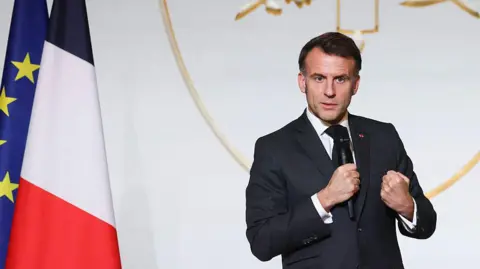
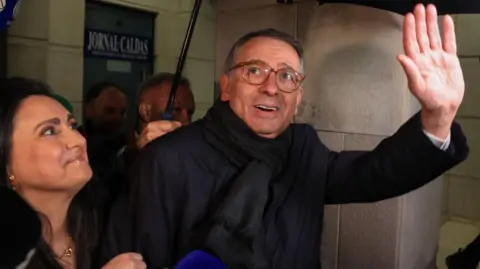
In the midst of an unraveling political landscape, President Emmanuel Macron has appointed veteran centrist François Bayrou as the new Prime Minister in hopes of steering France out of a governmental crisis. Bayrou, who is well-regarded across various political factions, finds himself navigating treacherous waters similar to those that led to the fall of his predecessor, Michel Barnier.
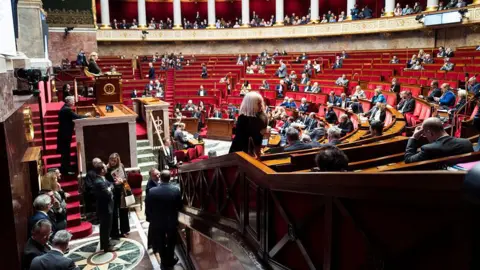
Bayrou's appointment comes as the French National Assembly remains stalemated in a three-bloc impasse that has persisted since July, casting doubt on his potential for success. Macron's administration has been on a quest to form a new informal coalition since Barnier's recent ousting due to a vote of no confidence supported by left-wing and populist right factions. Despite initial attempts to engage the Socialist Party (PS), disagreements over policy terms led Macron to pivot back to his trusted ally Bayrou.
At 73, Bayrou has a wealth of political experience spanning over four decades. He has led the Modem party since its creation in 2007 and has roots in the Christian Democrat tradition. While he briefly served as Macron's justice minister in 2017, his political tenure has been marked by struggles, including a party funding scandal that could resurface. Despite these drawbacks, Bayrou has developed significant relationships with leaders across the political spectrum, including Marine Le Pen from the National Rally.
Political commentators suggest that Bayrou could adeptly navigate France’s current turmoil, using his network to build bridges across the aisle. His past support for leftist policies has earned him credibility with Socialists, but his conservative stance on fiscal matters resonates with the right. Observers caution, however, that if he fails to establish a clear agenda, he could face threats from the populist right.
As Bayrou prepares to name his cabinet, the composition will signal whether he effectively fosters cooperation between various factions. His immediate challenge involves crafting a new budget for 2025 to replace the one derailed by Barnier, as he faces inevitable pushback from both the left and far-right.
Amidst hopes for unity, Macron and Bayrou have discussed a potential non-aggression pact for parliament that would allow for operational stability. Critics, however, warn such an agreement could lead to political stagnation, especially in tackling urgent issues like national debt. As the political situation evolves, the fate of the French government rests heavily on François Bayrou's shoulders.