In brief
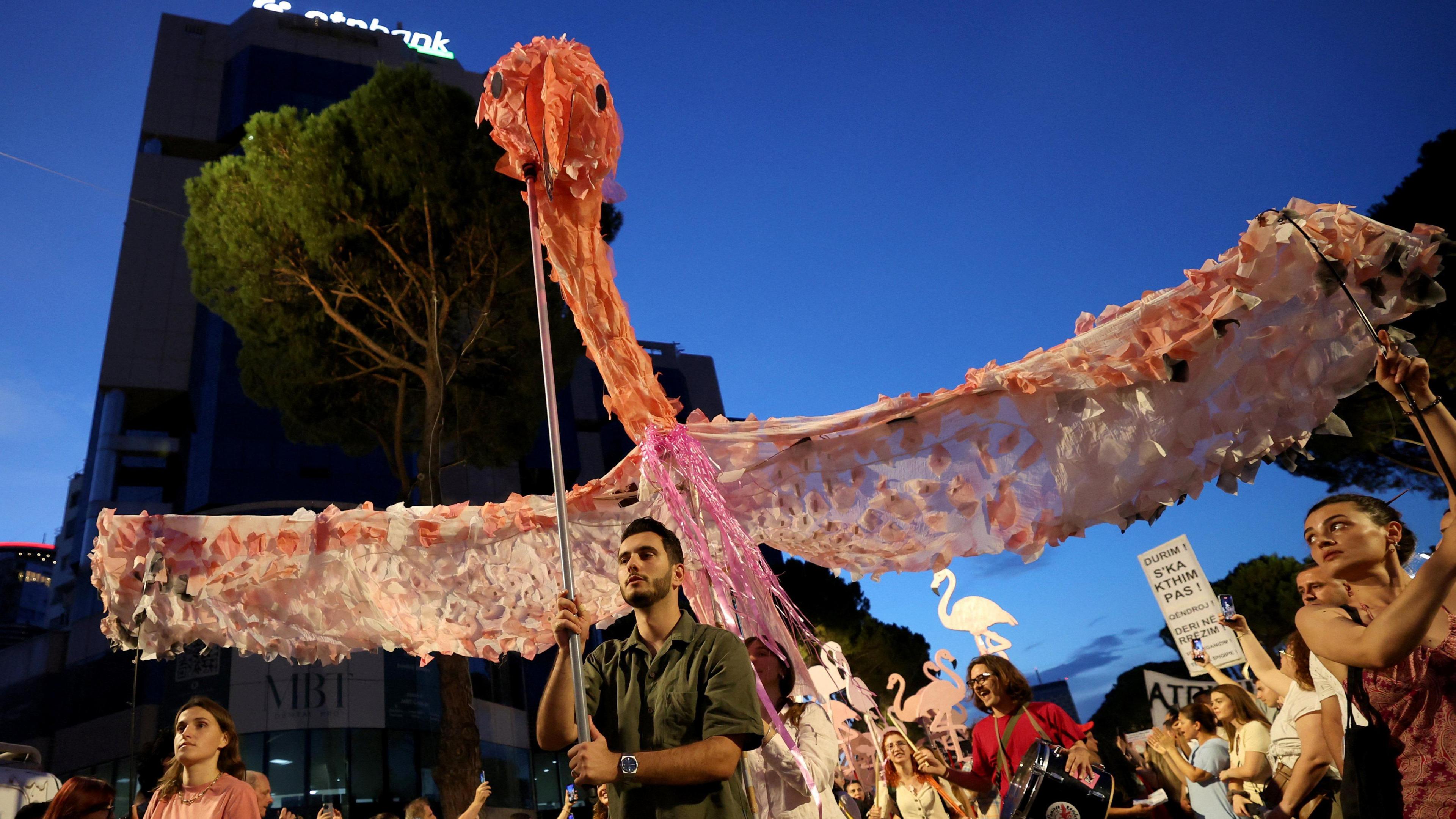
The ‘Flamingo Revolution’ began when a group of investors sought to build a luxury resort on the protected Narta Lagoon, sparking protests that have turned into a nationwide movement demanding better schools, job security, and living standards. Protesters, known for their flamingo‑shaped signs, have marched outside Prime Minister Edi Rama’s office, calling for his resignation and an overhaul of Albania’s governance. The movement has highlighted alleged corruption, the influence of foreign oligarchs, and the rapid urbanisation of Tirana’s skyline. While Rama frames the unrest as a sign of a healthy democracy, his close political allies are under investigation, deepening doubts over his integrity. If the protests persist, Albania’s political future remains uncertain, with flamingos symbolising both the original grievance and the ongoing push for change.
First they protested about flamingos. Today, thousands march below Albanian Prime Minister Edi Rama’s office to chant for schools, jobs and living standards. The movement now demands his resignation.
Flamingos have long gathered at the Narta Lagoon outside coastal Vlora. The birds became a symbol when investors—including Jared Kushner and other international backers—sought to erect a luxury resort there. Roma’s government granted them ‘special investor’ status, sparking the first wave of protests.
While no planning permission has been issued and an environmental impact assessment is pending, bulldozers and fences have already appeared on the site, amassing anger that spread through social‑media videos of security guards beating a protester. The government has confirmed the incident, but corruption allegations against the administration have intensified.
“I’m here for our schools. I’m here for our hospitals, for my family that lives outside Albania and for staying in my country,” says Helena, a young protester captured by journalists. Her words echo a broader frustration with the government’s focus on construction over citizens’ welfare.
Amid the chaos, Fatos Lubonja—who survived a forced‑labour camp during Enver Hoxha’s rule—highlights the alleged links between the current government, organised crime, and foreign corruption, claiming the building boom is a façade for money laundering.
Prime Minister Edi Rama maintains that the protests signify a healthy, democratic society. He claims the Socialist Party “will give its own skin to the country.” However, several of his close allies are now under investigation by Albania’s anti‑corruption prosecutors (SPAK), increasing public concern about his integrity.
The protests continue nightly, with flamingo‑shaped signs and banners calling for urgent reforms. While the protests grow, so does the tension between the government and the citizenry. Whether Rama will step down remains to be seen, but the flamingos have become a lasting symbol of resistance in Tirana.
For the moment, the stand‑off continues. Flamingos may well stay on the streets of Tirana as protests intensify.