In brief
A shift in Earth's temperature patterns prompts investigation into underlying factors beyond carbon emissions.
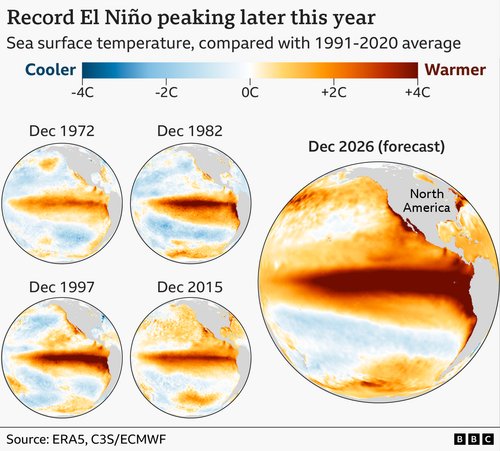
In a striking climate update, scientists confirmed that January 2025 was the warmest January on record globally, catching researchers off guard due to the prevailing La Niña conditions in the Pacific Ocean. While frigid weather engulfed much of the United States last month, the planet's overall temperature continued to escalate, exceeding expectations set by the typical cooling effects associated with La Niña.The sustained warmth, observed over the last two years, has sparked curiosity among climate scientists to explore if other changes in the Earth's chemistry are contributing to this heat wave, alongside the prevalent carbon emissions from fossil fuels. Traditionally, La Niña has been expected to dampen average global temperatures, but unusual weather patterns have complicated this expectation, leading to record-high temperatures in both 2023 and 2024.Russell Vose, a climate scientist at the National Oceanic and Atmospheric Administration, noted that the likelihood of 2025 becoming the hottest year on record is currently low. However, he cautioned that predictions could drastically change, reflecting last year's miscalculations regarding 2024's temperatures. As environmental anomalies persist, researchers continue to assess the intricate factors influencing global climate dynamics, leaving room for uncertainty in future forecasts.