In brief
As the Sudanese army announces significant territorial gains, residents of Khartoum are caught in the middle of intense conflict, with urgent calls for humanitarian aid growing louder amidst the devastation.
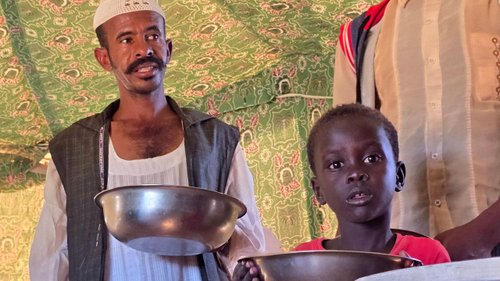
In a striking turn of events, the Sudanese army claims it has successfully recaptured substantial parts of the war-torn capital, Khartoum, from the paramilitary group, Rapid Support Forces (RSF). This marks the military's most decisive victory in the protracted civil war, which has severely impacted the region for almost two years. According to local residents, ongoing clashes have intensified, leading to fears of violence spilling into neighborhoods—a reality underscored by Dr. Mustafa, who described the skirmishes as "heavy".Key locations recaptured this week include the state mint, crucial for currency production. Despite the progress, the RSF still retains control over significant portions of Khartoum itself, although the army now dominates broader areas, such as Omdurman and Bahri. Following gains in the state of Gezira, the military leadership, headed by General Abdel Fattah al-Burhan, expresses confidence in their momentum to drive the RSF out of the capital. "Very soon there will be no rebels in Khartoum," Burhan stated, igniting hopes for a resolution to the conflict.The humanitarian situation remains dire. With the war displacing around 12 million people and causing tens of thousands of civilian fatalities, Sudan is now considered the world’s worst humanitarian crisis, according to various international aid organizations. Many citizens in Khartoum are suffering from famine, an issue exacerbated by the ongoing violence, which has led to widespread looting and atrocities reported against civilians.Public sentiment appears skewed towards the army, as residents blame the RSF for rampant violence, including murder, sexual assault, and property theft. However, RSF officials are quick to label claims of military progress as fabrications. Analysts suggest that the army's recent enhancements in personnel and supplies have been pivotal to their operational successes.With the dynamics of power shifting, fear lies heavy on the hearts of Khartoum’s citizens, who navigate the treacherous waters of survival amid conflict. Despite the impending threat of retribution against perceived collaborators, residents like Amir express concerns for their family members who face dangerous circumstances while trying to uphold their responsibilities in the besieged city.As the conflict continues, the residents of Sudan’s capital hold their breath and await developments, trapped in a cycle of violence that has marked life in the region for nearly two years.