In brief
Recent developments surrounding the auction of a 19th-century skull from Nagaland have ignited a passionate movement among Naga tribes to reclaim their ancestral remains held in foreign collections.
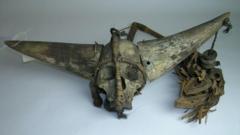
The tragic reality of colonial legacies continues to haunt the Naga tribes of India as they strive to retrieve ancestral human remains that were forcibly taken and are now being auctioned abroad. The situation erupted when Ellen Konyak, a member of the Naga Forum for Reconciliation (NFR), unearthed the news that a horned skull from a Naga tribesman was on auction in the UK. This skull, alongside many others, was collected during the colonial era by European administrators, and its auction prompted immediate outrage among Naga communities.Konyak described the auction as "insensitive and deeply hurtful," expressing her dismay that in the 21st century, ancestral human remains are still up for sale. The auction house, Swan at Tetsworth, had placed a value of £3,500 to £4,000 on the skull, which originated from a Belgian collection. This auction was not just about one skull; it featured other controversial items including shrunken heads and other human remains, further intensifying Konyak's distress.The fallout from this incident has led to widespread calls for the repatriation of such remains, with experts and politicians alike voicing the need to confront ongoing colonial injustices. The chief minister of Nagaland denounced the auction as "dehumanising." Although the auction house eventually withdrew the skull following protests, many Naga people found the incident a stark reminder of their tumultuous colonial history.Research into the colonial past suggests that many human remains in Western museums were obtained without proper consent. Alok Kumar Kanungo, a scholar of Naga culture, estimates that there are roughly 50,000 Naga artifacts across UK museums and private collections, including 6,550 items at Oxford University's Pitt Rivers Museum. The increasing ethical scrutiny concerning the sale and display of human remains has prompted some museums to consider repatriation.Kanungo describes human remains as "white elephants" for museums, no longer mere exhibits or sources of revenue. Recent years have seen museums return remains to Maori tribes, Aboriginal Australians, and other indigenous groups—actions that have sparked renewed hope among the Naga.In a significant move, the Pitt Rivers Museum removed Naga skulls from public display in 2020 and placed them into storage. The NFR is now responding with efforts to reclaim these remains, forming a group dubbed Recover, Restore and Decolonise. Research involved is complex, requiring identification of descendants and navigational understanding of international regulations.This endeavor represents more than just logistical efforts for the Naga people; it encompasses spiritual elements as well. Konyak emphasized the importance of returning these remains as a mark of respect, reinforcing ties to their cultural and ancestral narrative. The group has been actively engaging with Naga elders through community meetings and educational initiatives to build awareness about the presence of their ancestors in foreign lands.Confusion persists even among Naga elders regarding the extent of their ancestral remains residing overseas, highlighting the cultural disconnection caused by colonization. Konyak revealed that she discovered a skull belonging to her ancestor listed in the museum, reflecting the deep personal connection to the struggle for repatriation.The legacy of colonial rule in Nagaland has involved violent suppression, with the British often erasing critical cultural markers through their tactics. This history burdens modern Naga communities, who see reclaiming their ancestors' remains as a significant step toward reclaiming their identity and narrative—a journey that intertwines respect for the past with hopes for the future.