In brief
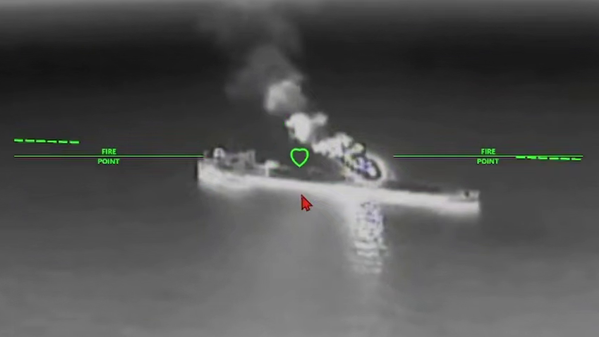
Ukraine’s military has launched a series of drone strikes on Russian merchant vessels in the Sea of Azov, close to the annexed peninsula of Crimea. Robert Brovdi, commander of Ukraine’s drone forces, claims that between 25 and 36 ships have been hit or set ablaze over the past week, severely damaging the shadow fleet that carries fuel to the peninsula. The attacks coincide with earlier strikes on Russian land corridors and oil refineries, contributing to widespread fuel shortages across Russia, including its major cities. With the Black Sea Fleet largely unable to defend these shipping lanes, Ukrainian forces are turning a routing of tankers into a “shooting gallery” for their unmanned drones. The damage to sea‑borne logistics threatens to further isolate occupied Crimea and exacerbate shortages of oil and related supplies for Russia’s frontline troops.
Ukrainian military forces have escalated drone attacks on Russian merchant vessels operating in the Sea of Azov, an inland body of water fed by the Black Sea via the Kerch Strait. The recent operations are part of a broader “logistics lockdown” aimed at choking supply lines to Crimea, Russia’s annexed territory on the southern coast.
According to Robert Brovdi – better known as Magyar – Ukraine’s unmanned‑systems commander reports that between 25 and 36 Russian tankers have been struck and set ablaze in the past four days. Some of these vessels carried up to 7,000 tons of fuel from Taganrog Bay to the peninsula’s Kerch port, an onshore loading hub that serves the surrounding military installations.
The drone strikes are believed to hit key members of the Russian shadow fleet of commercial oil tankers, causing significant damage to the navy’s dual purpose troops and transport vessels. Satellite imagery from NASA shows a persistent fire plume that began on 6 July, suggesting that the first wave of attacks persisted through the overnight period into mid‑week. The attacks also extended to a passenger ferry, SKS One, and a bulk carrier in Kerch port, raising concerns about the safety of maritime traffic in the region.
The disruption comes at a time of acute fuel shortages across Russia, with more than 90 percent of regions reporting limited gasoline and diesel. President Vladimir Putin’s earlier promise to guarantee 70,000 tons of fuel for Crimea per month now faces a new logistical challenge, as the ice‑bound fuel corridors are threatened both by land routes in the border region and now sea routes in the Sea of Azov.
Ukraine’s strategy to target Russian maritime logistics has outpaced previous tactics, delivering rapid results that keep critical supplies from reaching their intended destinations. The Black Sea Fleet has been cited as reluctant to intervene, with some analysis suggesting it has confined itself to the port of Novorossiysk, leaving coastal vessels exposed. As both sides continue to trade blows, the economic and military pressure is expected to grow, further tightening the siege on occupied Crimea and its supply chains.
For Ukrainian President Volodymyr Zelensky, these actions underscore a broader strategic aim: to create logistical paralysis for Russian forces while ensuring the citizenry at home remains under the strain of fuel scarcity. He has positioned the use of unmanned drones as a direct response to Russian attacks on local infrastructure, arguing that it compels Russian leadership to “feel that it is their state that is waging war.”