In brief
The installation serves as a catalyst for discussions on art and public funding, challenging the local community's views.
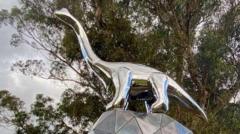
The recent addition of a seven-metre tall stainless steel dinosaur sculpture, named Boom Boom, in Taupō Sculpture Park has ignited a fiery debate among locals. Installed in the heart of New Zealand's scenic North Island, the sauropod statue was commissioned by the Taupō Sculpture Trust and created by Slovenian-born artist, Gregor Kregar. Proponents describe it as "fabulous," while critics have dubbed it an "eyesaur," calling for a reassessment of the $100,000 public investment spent on the piece.Kregar, who expected varied reactions to his work, shared his belief that art should evoke discussion. "Sculpture sometimes stops people from their everyday interactions with the world," he stated. The split opinion reflects a dynamic conversation about art’s role in community identity. Some locals appreciate that Boom Boom is getting people talking about art, while others express disappointment in how the funds could have been allocated elsewhere.The funding for the sculpture was decided back in 2018, long before recent increases in Taupō District Council rates. Critics also argue the sculpture lacks a connection to the town's heritage, which has been acclaimed as New Zealand’s most beautiful in the 2023 Keep New Zealand Beautiful Awards. However, Kregar has pointed out that the rock on which the dinosaur stands pays homage to the local volcanic history.Located near Lake Taupō—New Zealand's largest lake formed by a caldera explosion nearly 1,800 years ago—the park draws inspiration from the region's geological past. While sauropods are among the few dinosaur species believed to have lived in New Zealand, their extinction 66 million years ago adds a layer of fascination.Kregar remains optimistic that the spirited debate will eventually lead to a fondness for Boom Boom, becoming a beloved part of Taupō’s identity. Meanwhile, Kim Gillies, secretary of the Taupō Sculpture Trust, mentioned that choosing to commission such a bold piece was a calculated decision aimed at putting the town on the map, stating, "safe is a bit boring, right?"