In brief
Two Catholic bishops in the United States have issued public apologies after images of them praying beside President Donald Trump in the Oval Office were released. The bishops, Archbishop Jeffrey Grob and Bishop William Joensen, insisted the meeting was a confidential prayer session arranged by the White House Faith Office and not intended for political use. Critics point to the timing—less than two weeks before mid‑term elections—and the bishops’ roles in Catholic communities as potential electoral influences. Pew Research Center reports that support for Trump among U.S. Catholics has fallen, though a majority still view the former president favorably. The incident highlights the tense relationship between the Trump administration and the broader Catholic Church amid ongoing immigration debates.
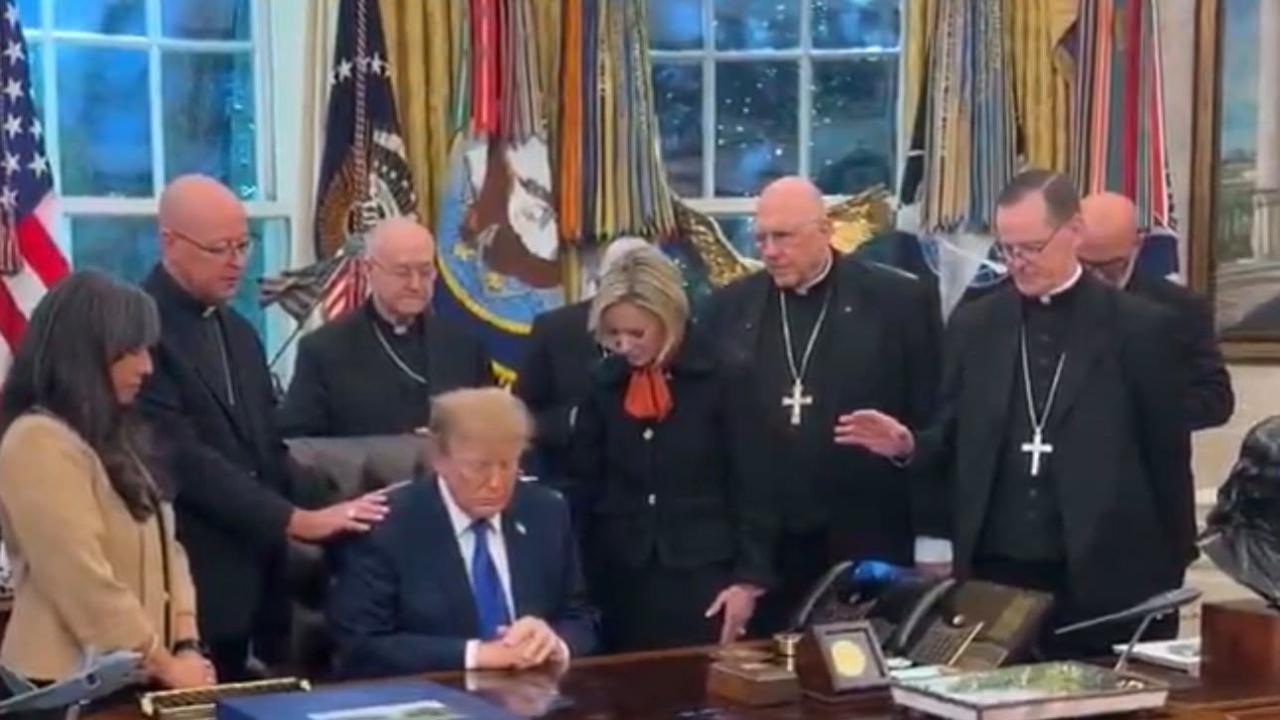
Catholic bishops have publicly expressed regret after photographs and video footage of them praying with President Donald Trump in the Oval Office were released, prompting questions over the meeting’s political implications.
The gathering, held on 22 October, saw a group of bishops congregate around Trump at the Resolute Desk, a moment captured by White House assistant Margo Martin and subsequently shared on social media.
Archbishop Jeffrey Grob of Milwaukee, one of the pictured bishops, clarified that he believed the event had been a confidential, non‑public prayer session arranged by the White House Faith Office; he said the bishops had intended nothing but a spiritual briefing, not a campaign endorsement. Bishop William Joensen of Des Moines echoed this stance in an online statement, noting the meeting’s focus on immigration, visas for clergy, and “the exploitation of vulnerable poor persons.” He added that the bishops had no intention to support any political candidate or party.
The timing, in the run‑up to the 3 November mid‑term elections, has upset some congregants and members of the broader Catholic community, who worry the images could be used to sway voters. Pew Research Center data cited a decline in support for Trump among U.S. Catholics, with 30% approving of his job performance in a recent survey, down from 47% during his 2025 return to office.
Despite the bishop’s apologies, the White House spokesperson, Taylor Rogers, defended Trump’s standing among Catholic Americans, expressing confidence in his past record. The bishops’ statements and the ensuing debate underscore a continuing friction between the Trump administration—particularly its hard‑line immigration stance—and the Catholic Church, which has historically opposed policies seen as punitive toward migrant families.