In brief
A year after a wave of campus investigations and funding cuts, President Trump’s administration is now using the federal rule‑making process to shape higher education nationwide. New proposals target accreditation, grant eligibility and diversity policies, while the count of fresh investigations has dropped sharply. Universities have already begun to adapt, closing DEI offices, tightening protest rules and, at some schools, resisting pressure to sign White House agreements.
WASHINGTON (AP) – The Trump administration’s assault on higher education began with campus‑by‑campus investigations and federal funding cuts that rattled a hundred universities across the country. Yet the White House’s newest strategy moves beyond the old model of individual campus visits: it now seeks to rewrite federal regulations that determine how colleges and universities are funded, accredited, and governed. By embedding its priorities directly into the underlying rules that shape educational policy, the administration hopes to ensure its influence reaches every institution under federal oversight.
Under the new approach, the Education Department proposes sweeping changes to the accreditation system, the federal process that decides which institutions qualify to receive public money. The plan would require accreditation agencies to confirm an institution’s “intellectual diversity,” a euphemism for a requirement to include more conservative voices on campuses. Simultaneously, a proposal from the Office of Management & Budget (OMB) would require grant recipients to make sure that their programs and research do not promote diversity, equity, and inclusion (DEI) policies or anything that could be deemed “anti‑American values.” The overarching theme is simple: the administration wants to keep the federal purse strings aligned with its conservative agenda.
From Investigation to Regulation
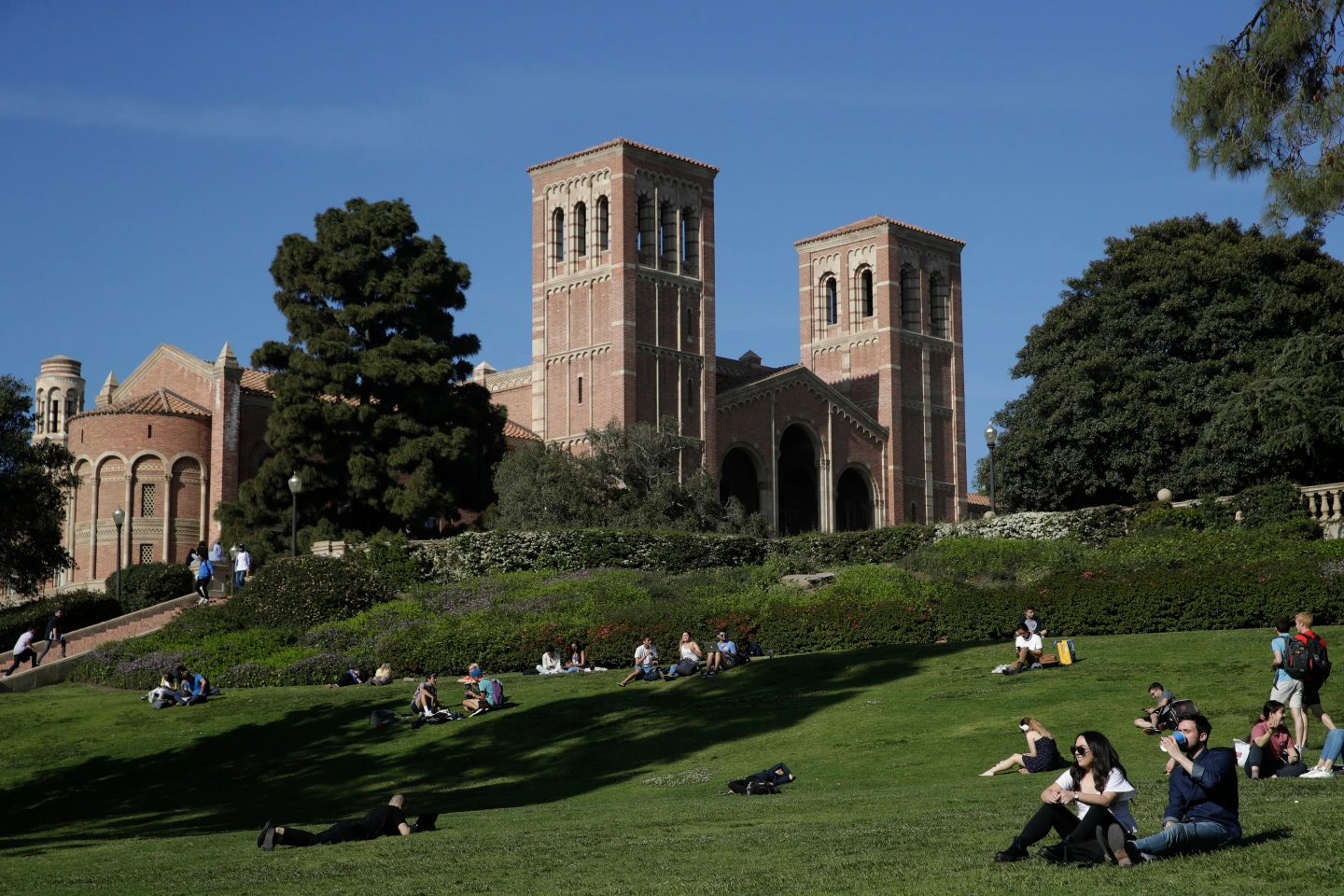
Last year, Trump officials launched a vigorous “blitz” on universities, opening investigations in dozens of campuses and threatening cuts in federal research funding unless the schools complied with the president’s political doctrine. Many institutions, from Harvard to the University of California – Los Angeles (UCLA), faced lawsuits, investigations and the specter of funding cuts that could hit their budgets hard. However, federal judges, including judges on the Ninth Circuit, blocked the administration from imposing cutting‑edge reductions in research funding at Harvard and UCLA. Those delays demonstrated the limits of the more blunt‑instrument approach.
Now, the Department of Education and the Justice Department edict a new tactic. The Education Department says it will use a “scalpel” to cut out the bad – a familiar phrase it used last year – but, according to Education Undersecretary Nicholas Kent, the new rules would “affect 6,000 institutions.” Kent explained that the shift focuses on series of regulations that can be adopted without a Congressional vote, allowing the White House to set policy on a national scale. The department would also consider “streamlining” the application process for federal grants and, as part of its new toolkit, would target universities that it says violate its reinterpretation of civil‑rights law – a move that could curtail programs deemed sexist or racially discriminatory.
Meanwhile, the General Services Administration (GSA) is proposing a rule that would require universities to certify that they have no DEI initiatives deemed unlawful by the administration. This move would place the burden of compliance on a broadened group of federal grant recipients, wildlife the ripple effect across universities and their contractors.
Fewer Investigations, Greater Focus on Admissions
In a surprising pacific, the Department of Education and the Justice Department have cut back the number of new investigations. In the current year, roughly a dozen new cases have been filed, a stark drop from the more than 70 that were filed last year. Though the count of open investigations has lingered, the administrative focus appears to be shifting to college admissions cases – especially those that pertain to race and affirmative action. The Justice Department has already started to wind up lawsuits against Harvard and UCLA, arguing that the universities tolerated antisemitism and that Harvard refused to produce data requested by the administration. The administration also sued both campuses multiple times on these grounds.
Admissions investigations are more complex because they require large data sets and take longer to build. One key recent case determined that medical schools at Yale and UCLA had discriminated against white and Asian‑American applicants in favor of Black and Latino students. These findings demonstrate the administration’s willingness to confront higher‑education institutions that employ race in the admission process. “We are making sure,” Kent said, “that we elevate our best and our brightest and that we’re not pushing an arbitrary thumb in the scale because of somebody’s skin color.”
Far‑Reaching Political Undoings and Campus Moves
In response to the last year’s push, many universities have quietly made changes to avoid scrutiny. Some have closed DEI offices. Others, such as the NCAA, have curtailed the participation of transgender athletes. The Ivy League and other private colleges have tightened protest rules after a pro‑Palestinian demonstration triggered federal investigations. On the research end, top schools have paused individual research projects after the prospect of funding cuts loomed. In classrooms, professors have reported feeling hush‑up with what and how they speak; the fear that any statement could bring a federal investigation looms large. A strong sense of caution has crept into academia, even as faculty members argue that the sector is becoming more robust. The American Association of University Professors (AAUP) estimates an increase in student pressure on faculty to join the White House’s new “compacts,” which promised favorable access to research funding in exchange for complying with the former administration. The AAUP has filed lawsuits to stop funding cuts, including one that stopped cutting UCLA.
What the Future Holds for Higher Education
Today, less than a dozen investigations are active, but school leaders say it is only a matter of time before the pressure mounts again. The White House is broadening its scrutiny to focus on the federal constants that govern each institution. The new rules are intended to implement the administration’s version of higher‑education governance. The push to uproot DEI principles, review admissions, rationalize the accreditation system and ensure institutional accountability feeds a vision that the White House is pressing forward on what it sees as “wokeness” run amok in academia.
}