In brief
A hug between U.S. envoy Steve Witkoff and Ukrainian President Volodymyr Zelensky at Oslo offers a fleeting moment of optimism, yet the underlying mistrust between the leaders deepens. Trump’s recent aggressive comments and a new sanctions waiver on Russia fuel Kyiv’s concerns that Washington is shifting its policy in their favour. Tensions highlight a pattern of U.S. diplomatic flare-ups that began with Trump’s 2019 call to investigate Joe Biden, culminated in a stalled military aid package and continues in the current Russian‑driven conflict. Ukraine’s leadership remains wary that U.S. intelligence sharing and missile procurement are being throttled, while President Trump’s decision to lift sanctions may reassure some allies. The Oslo dialogue, therefore, stands as a high‑stakes yet fragile attempt to navigate an ever‑volatile alliance.
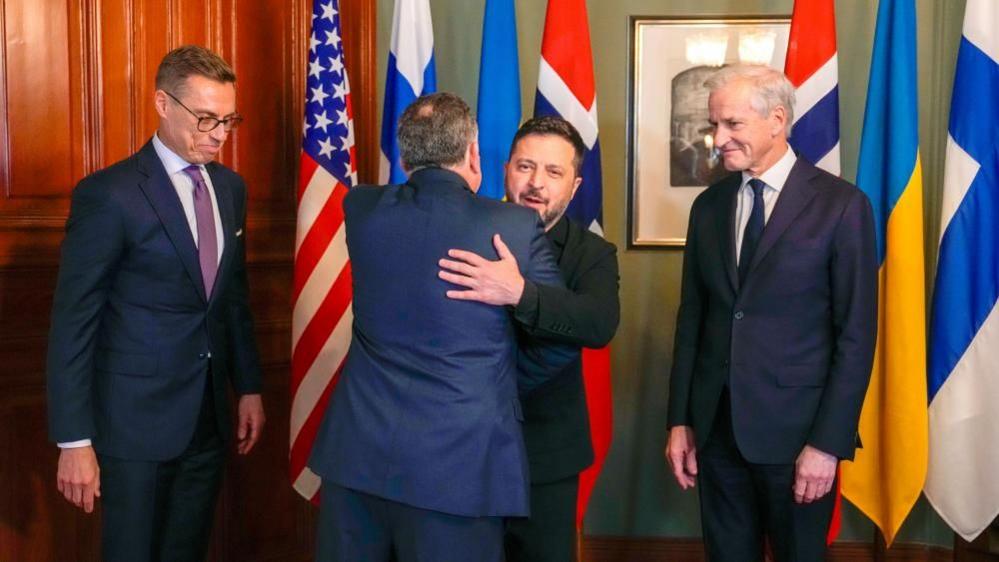
Following a meeting in Oslo, U.S. envoy Steve Witkoff extended a hug to Ukrainian President Volodymyr Zelensky before they departed for the city’s summit. Zelensky posted the moment on social media, thanking his partners for their support, but the brief display of camaraderie could not mask the deeper mistrust that underpins Washington‑Kyiv relations.
For President Trump, the meeting is one of many events that illustrate his continuing frustration with Kiev. Over the last month he has made pointed remarks in public and private forums, describing Zelensky as lacking insight and questioning his positions on the Russian‑fuel deal. Such comments echo a pattern that began in 2019 when a Trump‑Zelensky conversation was used to prompt investigations that would later lead to the former president’s impeachment.
The current conflict with Russia has amplified the stakes. Ukraine argues that recently imposed sanctions, hoped to curb Russian aggressions, have stalled the delivery of essential military hardware, including Patriot missiles. The Ukrainian government also says that U.S. intelligence sharing and access to Starlink satellite internet have been throttled, raising fears that Kyiv’s early‑warning systems are not keeping pace with Russian drone and missile attacks.
In contrast, Trump’s administration has rolled back a number of sanctions against Russia, citing market interests and a desire to maintain diplomatic leeway. Former U.S. ambassador William Taylor described the decision as a ‘carrot‑and‑stick’ approach that provides the Kremlin with incentives while leaving Kyiv under‑equipped. The move prompted accusations from Ukrainian officials that Washington is “turning its back” on its beleaguered ally.
The Oslo hallway, therefore, represents a turning point—an encounter that could bridge divisions if both sides are willing to translate positive rhetoric into tangible support. Yet the historical pattern of episodic confrontation suggests that the rift between Trump and Zelensky will persist until realities on the ground prompt a more consistent strategy from the United States.