In brief
In a heart-wrenching narrative, survivors recount their near-fatal experiences during the catastrophic fires at The Station nightclub in 2003 and Le Constellation bar on New Year's Day 2026. Both disasters, ignited by indoor pyrotechnics and exacerbated by flammable materials, left countless victims. Experts emphasize the critical need for enhanced fire safety protocols to prevent such tragedies in the future.
Warning: This article contains themes you may find upsetting.
Gina Russo was watching a gig with her husband-to-be, Fred Crisostomi, one night in 2003 when she realised something wasn't right.
Great White, an 80s hair-rock band, had opened their set with a thrash of guitar chords, as four large pyrotechnic flares shot out from the stage. The flares instantly set fire to the surrounding acoustic foam panels, installed to deaden the sound.
It was immediate, Gina tells BBC News. It got bad very fast. The backflash just happened that quick.
Then came a black rain of smoke, Gina adds, the heat melting, then shattering, glass lights above people's heads. Gina and her fiance made for the nearest exit, a door to the right of the club's small stage. A bouncer blocked their way, but Gina has no idea why.
That's when a stampede began for the main exit, she says, and Fred desperately pushed her ahead in the crowd. Gina says bodies were piling up as people scrambled to get out - and her last memory was making it through the door to safety before passing out.
When she woke from an induced coma 11 weeks later, Gina learned her fiance had saved her life but had lost his in the fire.
This was at The Station nightclub in the snowy town of West Warwick, Rhode Island, on the east coast of the United States.
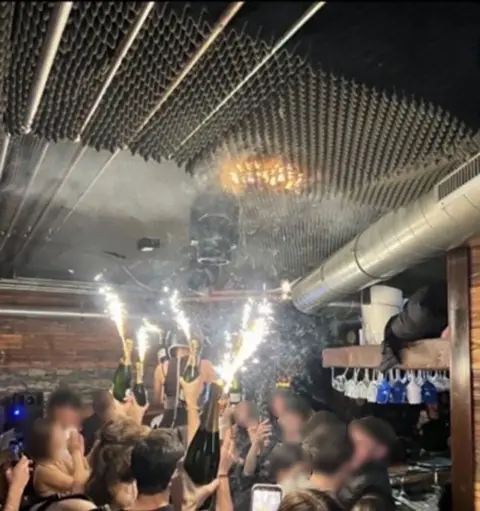
Now, years later, a near-identical event occurred at Le Constellation bar in Crans-Montana, Switzerland. In both instances, indoor pyrotechnics ignited fires that spread rapidly due to flammable materials. The similarities between these tragedies raise vital questions about fire safety protocols worldwide.
Experts like UK fire investigation consultant Richard Hagger suggest that the fires’ rapid escalation occurred because of the use of pyrotechnics close to combustible materials, stressing the importance of fire retardant materials for public venues.
A study of past incidents reveals ongoing issues across venues, highlighting a critical lack of global fire safety standards. With more than 1,200 lives lost in such disasters since 2000, the necessity for proactive measures in fire safety cannot be overstated.
Gina and Phil, survivors from The Station fire, still bear the emotional and physical scars from that night and underscore the need for continuous advocacy for fire safety awareness, ensuring that future generations are better prepared and educated about the dangers.