India's Supreme Court is currently evaluating petitions that question the validity of the Places of Worship (Special Provisions) Act of 1991. This law was enacted to preserve the character of religious sites as they existed on August 15, 1947, when India gained independence. It prohibits altering the nature of any place of worship and bars courts from adjudicating disputes about these sites, with the sole exception of the highly contentious Babri Masjid case.
The Babri Masjid, a mosque built in the 16th century, was destructively taken down by Hindu extremists in 1992, an event that sparked widespread riots and violence. The legal ruling from 2019, which granted the land to Hindu groups for temple construction, which has intensified discussions about the law's impact on India's communal tensions.
Recent petitions being heard by the Supreme Court, including one from a member of the ruling Bharatiya Janata Party (BJP), assert that the 1991 law violates religious freedom and the tenets of constitutional secularism. Hindu groups have reportedly launched numerous cases challenging the existence of various mosques that they allege were constructed over demolished temples, raising alarms among opposition leaders and Muslim advocacy groups. They argue that dismissing the law could result in an overwhelming number of disputes and exacerbate religious conflicts, particularly between Hindus and Muslims.
On Thursday, the Supreme Court instituted a temporary ban on registering new cases regarding the ownership of religious sites or conducting surveys to establish their religious status, with the next hearing scheduled for February.
The law's roots lie in the sociopolitical climate of the late 20th century when tensions between Hindu and Muslim communities reached alarming heights, especially amplified by the efforts of the BJP to erect a temple at the Babri Masjid's location. In parliament, then-home minister SB Chavan cautioned against the intolerance growing among certain factions, arguing for the preservation of minority places of worship.
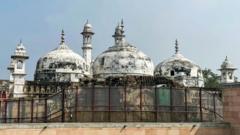
The ongoing legal fight both amplifies existing religious grievances and potentially threatens the stability of India's intricate social fabric. Many are closely watching the Supreme Court's decisions, as its rulings could determine the fate of disputed sites across the nation, including prominent cases involving the Gyanvapi mosque and Shahi Eidgah. The Supreme Court's recent decision to pause ongoing surveys marks a crucial moment in a saga that has, and could yet again, lead to fresh religious turmoil in the country.
Despite the legislative efforts, communal tensions persist, and violence has erupted sporadically, most recently in Sambhal town. The situation raises concerns about the implications for interfaith relations in a country where the preservation of diversity is constantly tested by rising nationalism and competing historical narratives.