In brief
Oil prices have sharply increased, nearing $110 a barrel, after reports of an airstrike on Iran's South Pars gas field. The Brent crude benchmark rose to $109.91, while gas prices also jumped significantly. Iran's government has responded with threats of retaliatory action, raising concerns over energy security amid escalating regional tensions.
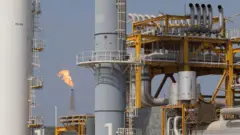
Oil prices leapt to nearly $110 a barrel after Iranian media reported an airstrike hitting a facility on the world's largest natural gas field. The Brent crude oil benchmark hit $109.91 a barrel just after 14:30 GMT, more than 5% higher than Tuesday's prices and remaining above $108.The surge followed a report from Tasnim, a news agency affiliated with the Islamic Revolutionary Guard Corps (IRGC), that Iran's petrochemical complex on the South Pars gas field had been struck. The benchmark UK gas price also jumped by 6% to 143.53p a therm before falling back below the 140p mark.While the price of both oil and gas spiked, they remained below highs seen earlier in the conflict, with oil reaching $116.78 a barrel on 9 March and UK gas reaching 162.55p a therm on 3 March.Iran's oil ministry reported that a fire at the petrochemical complex was under control, but the extent of the damage to the facility remained unclear. The military warned of "decisive action" in retaliation for the strike on its energy infrastructure, declaring any attacks on Iran's fuel and gas networks as legitimate targets for counteraction.In response to the attack, Iran has also suspended the flow of gas to Iraq to secure its own domestic supplies. The majority of Iran's gas (94%) is used domestically. Notably, Qatar operates facilities on the gas field as well and had previously halted production due to the ongoing conflict. Qatar's foreign ministry spokesman emphasized that attacks on energy infrastructure pose a threat to global energy security.