In brief
Skyroot Aerospace’s Vikram‑1 successfully entered low‑Earth orbit from Sriharikota, becoming the first Indian private company to achieve orbital launch. The seven‑storey rocket carried 350 kg of payloads, including scientific instruments and a symbolic lab‑grown diamond lotus honoring India’s space pioneers. Skyroot aims to offer a ‘cab service to space’, providing dedicated, on demand launches for small satellites and thereby sidestepping the long wait times of shared rides. The company, now the sector’s first unicorn with a $1.1 billion valuation, plans two more test flights this year before starting commercial launches next year. This launch signals India’s expanding private participation in a space market projected to rise from 2 % to 10 % of the global share by 2030.
What if launching a satellite was as easy as calling a cab? That vision has moved from speculation to reality as Skyroot Aerospace achieved India’s first orbital launch on Saturday.
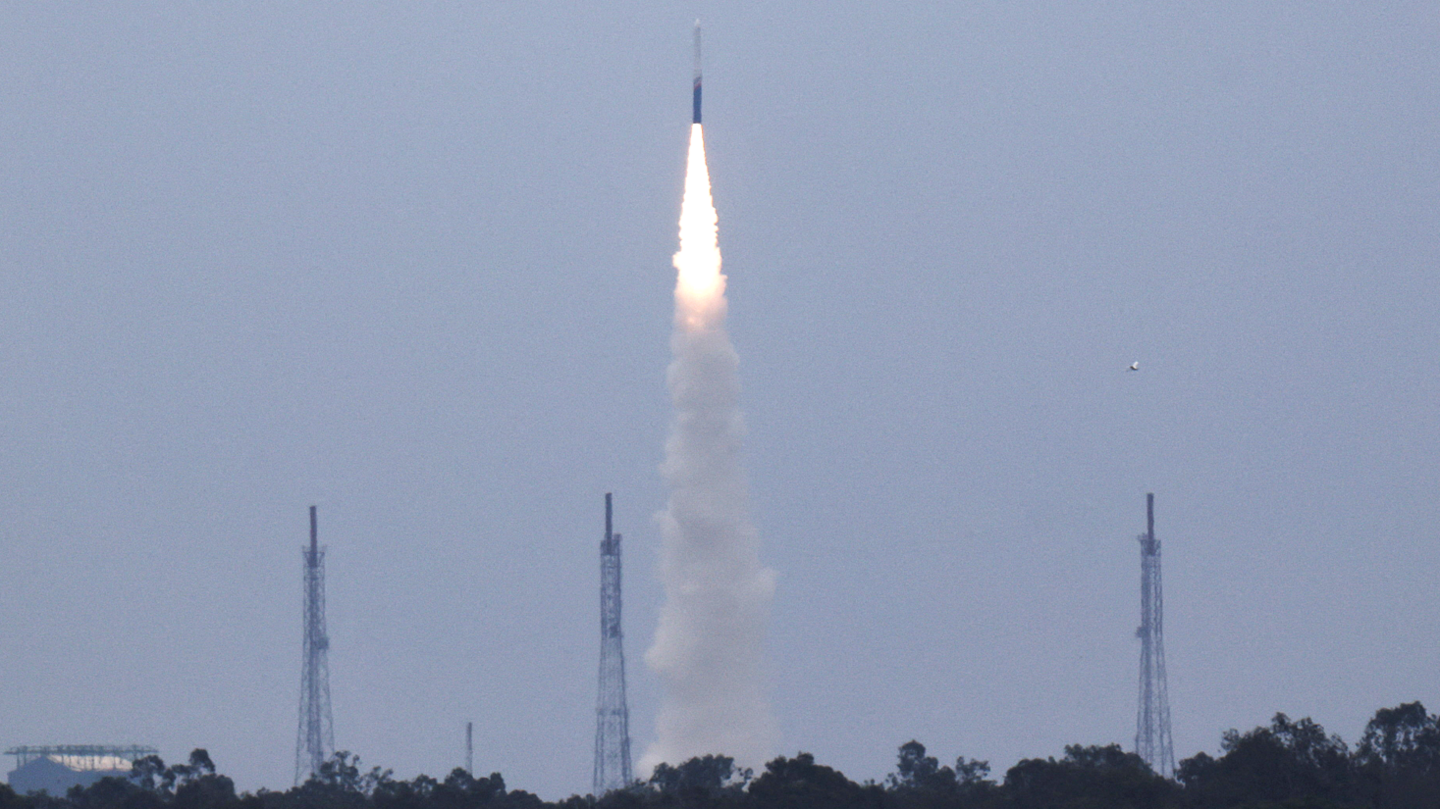
Skyroot, now the country’s first space‑tech unicorn with a $1.1 billion valuation, flew its Vikram‑1 rocket from the Indian Space Research Organisation’s Satish Dhawan Space Centre. The seven‑storey rocket lifted at 12:05 A.M. IST, travelled 280 mi (450 km) and spent 16 minutes reaching low‑Earth orbit.
The launch marks the first time an Indian private firm has flown a rocket into orbit, putting India only behind the United States and China.
Skyroot’s co‑founder and CEO Pawan Kumar Chandana said the company’s goal is a “cab service to space”, letting customers book dedicated flights to place satellites or visit stations, much like booking a taxi instead of waiting for a scheduled launch.
Vikram‑1 carried six payloads, including a robotic arm for removing space debris, an Earth‑observation camera, a German satellite, and two symbolic items: a lab‑grown diamond lotus and a tiny gold sculpture paying tribute to scientists CV Raman, APJ Abdul Kalam and Vikram Sarabhai.
Chandana told the BBC the diamond lotus is an artistic homage to space, calling the craft “Cosmic Bloom”, and reminds everyone of the nursery rhyme line “like a diamond in the sky.”
Skyroot plans two more test flights this year, with commercial launches scheduled for next year. The company can build one rocket per month at its Hyderabad factory and sees its market not just in India but globally, serving satellites that underpin agriculture, fisheries, disaster management, communication and more.