In brief
An international team of marine biologists has identified the largest whale graveyard on record, covering 1,200 kilometres in the southeastern Indian Ocean. The remains, dating back 5.3 million years, include the skeleton of an extinct beaked whale (Pterocetus benguelae), the largest carcass—a five‑metre Antarctic minke whale—and a new species named Pterocetus diamantinae. Biodiversity around the site is extraordinary, with jellyfish, worms and crustaceans thriving on the carcasses. The find, documented in Nature, opens new possibilities for understanding deep‑sea ecosystems and encourages further submersible exploration.
A team of researchers from China, Italy and New Zealand has revealed a massive underwater necropolis in the southeastern Indian Ocean. The site stretches roughly 1,200 kilometres (about 745 miles) along the Diamantina fracture zone and plunges 7 kilometres (four miles) beneath the sea surface.
The bones discovered there are some of the oldest ever found on the ocean floor – certain specimens date back 5.3 million years, placing them deep in the Miocene epoch. The sheer scale and antiquity of the burial have sparked significant excitement in the scientific community, which highlighted the site’s potential to answer fundamental questions about ancient marine life.
During 32 dives, teams collected samples from 485 fossil‑rich locations, uncovering a treasure trove of remains, including the extinct beaked whale Pterocetus benguelae and a new species christened Pterocetus diamantinae after the discovery site. Among the most striking finds was a five‑metre long Antarctic minke whale corpse, the largest single carcass recovered in the region.
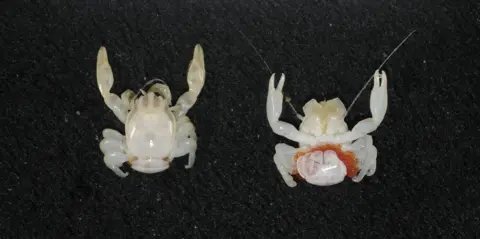
Beyond the skeletons, the area teems with life. Jellyfish, polychaete worms, and various crustaceans thrive on the decaying whale matter, creating a complex, nutrient‑rich ecosystem that could host yet‑unknown species. The discovery suggests that ancient whale falls may have acted as cradles for biogenic communities long before modern science recognised them.
Lead author Xiaotong Peng noted, “The scale, depth and age of this necropolis surpassed anything we had imagined.” When the study was published in Nature, Stephen J Godfrey added that the site “might hold many other exciting finds” and urged more submersible dives in similar habitats.