In brief
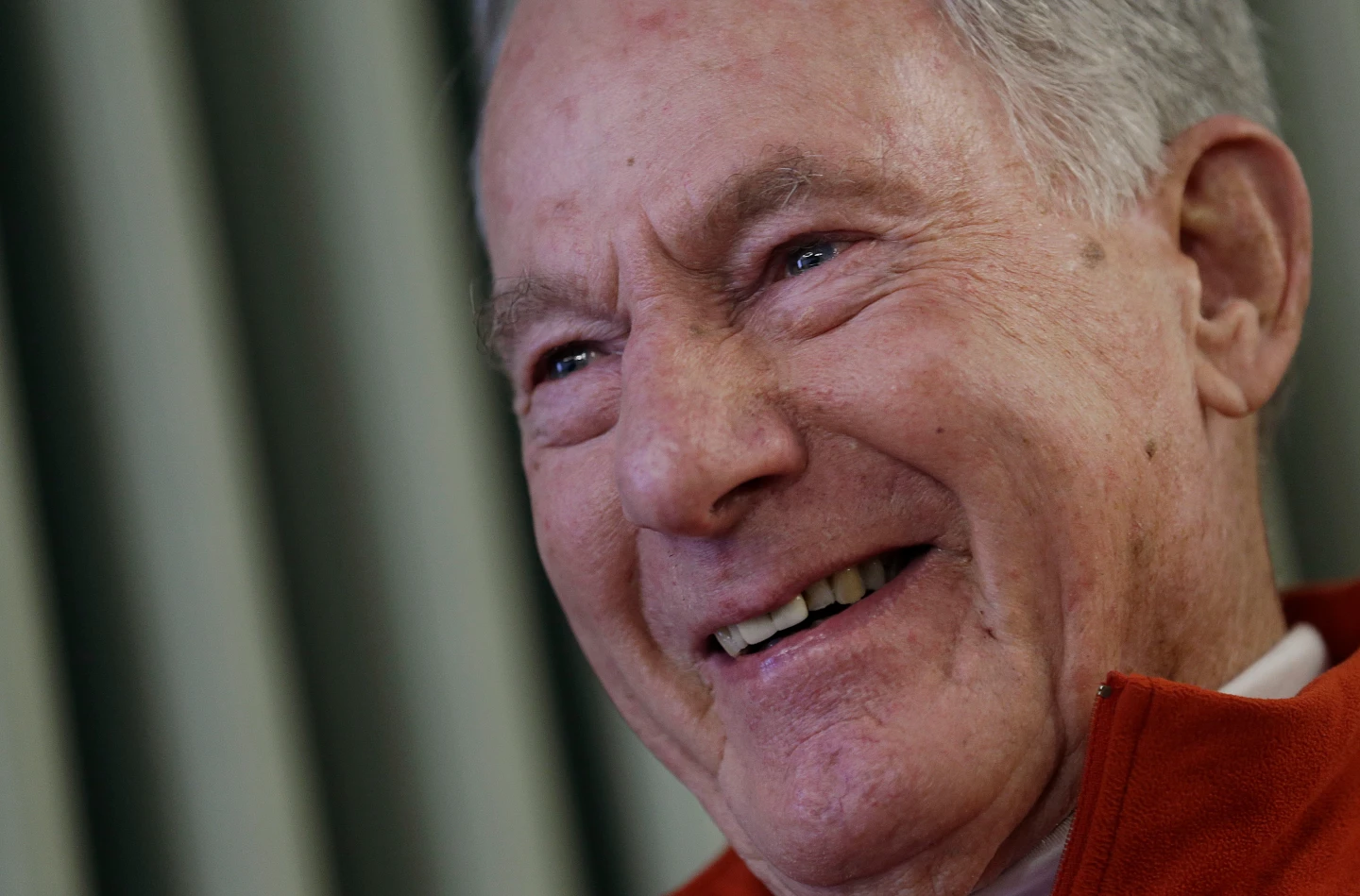
Jim Whittaker, who achieved the historic milestone of being the first American to summit Mount Everest in 1963, passed away in Port Townsend, Washington, at the age of 97. The mountaineer's ascent to Everest peaked ten years after Sir Edmund Hillary and Tenzing Norgay's initial conquest. Known for his engaging personality and dedication to causes, Whittaker was a significant figure not only in climbing circles but also among celebrities, including the Kennedy family. His adventurous spirit and reverence for nature marked his remarkable life, which included countless ascents and efforts to inspire others in the climbing community.
SEATTLE (AP) — Jim Whittaker, who in 1963 became the first American to reach the top of Mount Everest, has died. He was 97.
Whittaker’s 1963 ascent to the summit of Mount Everest came 10 years after Sir Edmund Hilary and Tenzing Norgay first scaled the peak.
Whittaker died Tuesday at his home in Port Townsend, Washington, according to a statement from his family.
His Mount Everest feat made the once-shy, rangy climber an instant celebrity, in demand for public appearances and expected to lend his support to good causes.
And it gained him entree into the world of celebrities, including the inner circles of the Kennedy clan. He became a close friend of Robert Kennedy, climbing a Canadian peak named Mount Kennedy after the assassination of the 1968 presidential contender.
Bobby Kennedy was “one of the grittiest little guys you’ve ever seen,” the 6-foot-5 Whittaker once remarked. “It’s not how big you are but how tight you are wound that counts.”
Whittaker’s career on the mountain slopes began when he tackled Washington’s Olympic Mountains as a Boy Scout. He once reflected that the beauty and danger of his sport sharpened the senses. “You’re in nature, participating in God’s creation ... it’s such a high, such a spiritual thing,” Whittaker said in a 1981 interview.
“I think it’s good to participate in that and to face life,” he added. “When you live on the edge, you can see a little farther.”
The risks are part of the game. “The mountains are fair, but they really don’t care,” Whitaker noted in 1987.
His achievements on the remote, snowy slopes of Mount Everest and nearby K2 assured him a niche in the record books. He shared world-class climber status with his identical twin, Lou, who led the first American expedition to scale Everest’s north face.
Lou Whittaker died in 2024 at age 95.
But Jim Whittaker himself said one of his proudest moments came in 1981, when he led 10 handicapped climbers up 14,410-foot Mount Rainier. For them, he said later, “that was Mount Everest.”
Whittaker scaled Mount Rainier more than 100 times but did not take its familiar flanks for granted. The fickle weather, even on a modest mountain, “can turn a good climber into a beginner” in hours.
And after years of risk on the dizzying pinnacles, he hoped to “die in my sleep with the television on.”
In recent years, Whittaker opposed the idea of requiring climbers to wear electronic locators in some circumstances. He said it would detract from the mystique of climbing. “If you take all of the risk out of life, you lose a lot. You're removing a personal liberty from somebody who wants to explore without a safety net,” he expressed.