In brief
Bahram Beyzai, a towering figure in Iranian cinema and theatre, died aged 87 in the US. Known for his deep-rooted connections to Persian culture and his poignant storytelling, Beyzai's legacy endures as his works shed light on historical and mythical struggles against oppressive regimes. Despite political challenges, his films, including the acclaimed 'Bashu, the Little Stranger', continue to resonate. Tributes from prominent figures underscore his lasting impact on Iranian art and culture.
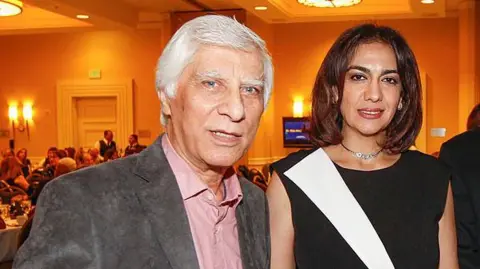
Widespread tributes have been shared for Bahram Beyzai, a giant of Iranian cinema and theatre, who has died aged 87 in the US. The front pages of Iranian newspapers mourn his loss, with opposition voices and those fond of the Shah era also paying homage to Beyzai. Prince Reza Pahlavi, the exiled son of the last Shah of Iran, described his passing as 'a great loss for the art and culture of our country.' Although Beyzai's later films were banned in the 1980s by the Islamic regime that toppled the Shah, a number of senior figures in the current government have also paid tribute to his contribution to Iranian culture.Several of the current crop of Iranian filmmakers have acknowledged their debt to him, with Jaafar Panahi - whose latest film won the top prize at this year's Cannes Film Festival - saying that he taught them 'how to stand up to oblivion.' Beyzai avoided direct political references in his work, both as a playwright and a film director, and always said he tried not to trade in overt messages. But his work over many decades sets historical, even mythic figures in conflict with oppressive religious and political systems.From a family of celebrated poets, Beyzai was imbued in the deepest traditions of Persian culture from birth. He first found fame as a playwright, drawing on Persian legend and ritual. A lifelong fan of cinema, he moved into making films in the 1970s. He won renown as one of the key figures in the new wave of Iranian cinema.His most productive period straddled the era of the Shah and the Islamic theocratic forces that deposed him - with both systems ready to sniff out hidden messages interpreted as dissent. As Jaafar Panahi noted in his tribute: 'Beyzai did not choose the easy way. He endured years of exclusion, imposed silence, and distance, but he did not give up his language and his beliefs.' A few years after the Iranian Revolution, he produced what many regard as his masterpiece, 'Bashu, the Little Stranger', about a small boy who tries to take refuge from the Iran-Iraq war. Banned in Iran like other films he made in that period, it was later voted by film critics as the greatest Iranian film of all time. The film was showcased in a restored version at this year's Venice Film Festival, winning an award for best film in the classics section.Beyzai left Iran in 2010, spending his later years in the US where he taught about Iranian culture. Despite leaving his homeland, his wife, the actress Mozhdeh Shamsai, mentioned that just hearing the word 'Iran' would still bring tears to his eyes, reflecting his enduring hope for the culture and future of his homeland.