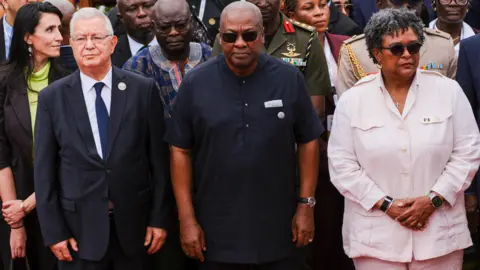
Mahama expressed his gratitude to voters and acknowledged the historic election of Jane Naana Opoku Agyemang as Ghana's first female Vice-President. He praised Bawumia for conceding early to maintain peace in the nation, despite some frustration over the delayed announcement of results from the Electoral Commission. With 60.9% voter turnout, Ghanaians showed engagement in the democratic process.
Ghana’s economy is facing severe challenges, including high unemployment and the rising cost of living, all exacerbated by illegal gold mining activities. However, many citizens believe Mahama's leadership could bring much-needed reforms. In regions previously dominated by the New Patriotic Party (NPP), Mahama's win signifies a shift in public sentiment.
While the election was largely peaceful, incidents of violence marred the celebrations, including two shootings and clashes at electoral commission offices. Mahama's victory is not only a personal comeback from his loss in the 2020 elections but also continues the pattern of alternating power between the NDC and NPP since the return to multi-party politics in 1992.
With his administration set to begin on January 7, 2025, Mahama promises to transform Ghana into a “24-hour economy,” hoping to alleviate the economic hardships faced by many. His supporters are optimistic about the future, celebrating the win as a vital step toward better governance.
Ghana’s economy is facing severe challenges, including high unemployment and the rising cost of living, all exacerbated by illegal gold mining activities. However, many citizens believe Mahama's leadership could bring much-needed reforms. In regions previously dominated by the New Patriotic Party (NPP), Mahama's win signifies a shift in public sentiment.
While the election was largely peaceful, incidents of violence marred the celebrations, including two shootings and clashes at electoral commission offices. Mahama's victory is not only a personal comeback from his loss in the 2020 elections but also continues the pattern of alternating power between the NDC and NPP since the return to multi-party politics in 1992.
With his administration set to begin on January 7, 2025, Mahama promises to transform Ghana into a “24-hour economy,” hoping to alleviate the economic hardships faced by many. His supporters are optimistic about the future, celebrating the win as a vital step toward better governance.