Nvidia boss Jensen Huang on Monday announced Alpamayo, a tech platform the company says will help self-driving cars think like humans.
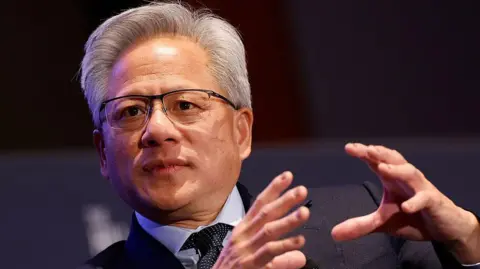
Alpamayo brings reasoning to autonomous vehicles, allowing them to think through rare scenarios, drive safely in complex environments, and explain their driving decisions, Huang said on stage at the annual CES technology conference in Las Vegas.
Huang also stated that Nvidia has begun producing a driverless car powered by its technology, the Mercedes-Benz CLA, in partnership with the German automaker. The vehicle will be released in the US in the coming months before being rolled out in Europe and Asia.
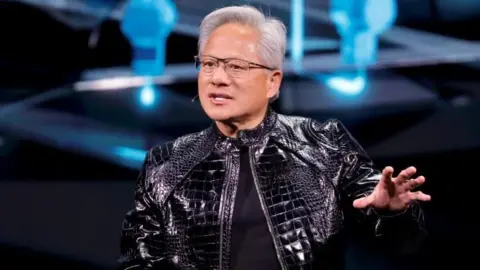
Wearing his trademark black leather jacket, Huang told an audience of hundreds that the project has taught Nvidia an enormous amount about how to help partners build robotic systems.
Analysts note that the announcement further solidifies Nvidia's leadership in integrating AI hardware and software, enhancing the company's push into physical AI.
Shares of the AI chip designer rose slightly in after-hours trading following Huang's presentation, which featured a video demonstration of the AI-powered Mercedes-Benz autonomously driving through San Francisco while a passenger sat behind the steering wheel with their hands in their lap.
Alpamayo is an open-source AI model, available for free on the machine learning platform Hugging Face, allowing researchers to access and retrain the model. Huang expressed a vision that someday, all cars and trucks will be autonomous.
Nvidia is currently the most valuable publicly traded company, with a market cap exceeding $4.5 trillion. The company also revealed its Rubin AI chips, which promise energy-efficient computing and reduced development costs.