In brief
The Integrated Food Security Phase Classification has confirmed that half a million people in Gaza are facing famine conditions, driven by systematic obstructions to aid by Israel, amidst escalating violence and severe restrictions on food access.
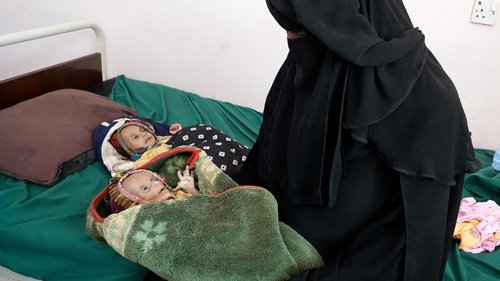
Famine has gripped Gaza, igniting a crisis that sees hundreds of trucks of aid stranded just outside its borders. The Integrated Food Security Phase Classification (IPC), endorsed by the United Nations, warns of a shocking humanitarian situation where half a million people—one-fourth of Gaza's Palestinian population—are suffering from famine, declared as "entirely man-made."The IPC's report, emphasizing the dire circumstances, identifies three critical indicators of famine: starvation, malnutrition, and mortality. Evidence shows that at least 20% of Gaza's households are experiencing extreme food shortages, around 33% of children are acutely malnourished, and approximately two in every 10,000 individuals are dying daily from starvation-related causes or malnutrition. The IPC highlights that the mortality data is likely underrepresented due to a breakdown of monitoring systems.As the Hamas-run health ministry announces new deaths linked to malnutrition—totaling 273, including 112 children—Israeli Prime Minister Benjamin Netanyahu continues to refute claims of famine, attributing responsibility to aid organizations and Hamas. Israel contends that aid agencies have failed to utilize supplies positioned at the Gaza border, although the reality on the ground paints a grimmer picture of obstructed access to necessities.This crisis traces its roots back to the ongoing conflict, which has drastically limited Palestinians' ability to obtain food. While restrictions have historically plagued Gaza, they intensified following the outbreak of war on October 7, 2023. Following escalating international pressure, Israel reinstated a limited flow of goods in late May but implemented a controversial new distribution system via the Gaza Humanitarian Foundation (GHF), which effectively reduced the number of distribution points from 400 to just four, making access exceedingly dangerous.Recent reports from the United Nations disclose that nearly 1,000 Palestinians have been killed in the vicinity of GHF distribution sites since May, with eye-witness accounts and medical personnel affirming that the majority were shot by Israeli forces. As Israel claims these deaths are misrepresented, humanitarian groups insist that the obstructions to aid are systemic.Despite recent increases in aid trucks entering Gaza, organizations stress that the flow remains insufficient. Only half of the 600 trucks required daily for basic sustenance have been granted access. Detractors have criticized Israel's airdrop strategy as ineffective and perilous.The accusation leveled at Hamas for the looming hunger crisis has come under scrutiny, with reports showing no systemic misappropriation of aid by Hamas itself. While some looting has occurred during aid distribution, it’s predominantly attributed to desperate civilians rather than organized sabotage.Israeli officials have dismissed the IPC's alarming assessment outright, labeling it as biased. In response to this denial, UN Secretary-General Antonio Guterres firmly stated that the occupying power, Israel, must comply with international law by ensuring food and medical supplies to the afflicted population.As the situation escalates, Israeli forces are preparing for an invasion of Gaza City, the reported epicenter of the famine crisis. With projections of forcibly displacing up to one million Palestinians, international agencies have expressed grave concerns about the impending humanitarian fallout amid existing famine conditions, which could exacerbate suffering among vulnerable populations, including children and the elderly. The ongoing catastrophe calls for immediate global intervention to avert further tragedy.