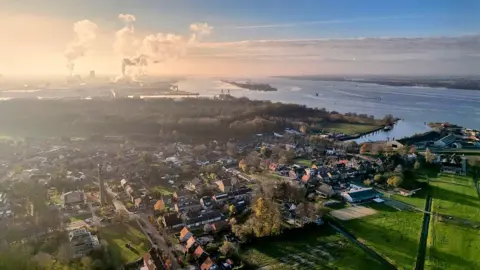
In the south of the Netherlands, beside a wide estuary, a village of around 1,100 people is likely to disappear from the map.
Moerdijk, a small fishing community 34km (21 miles) south of Rotterdam, is on the fault line of the nation's green energy transition. The Dutch government says the country needs vast new sites to build high-voltage substations where cables carrying electricity from growing offshore wind farms can be connected to the national grid.
Yet the Netherlands is short of land. Officials argue that Moerdijk, which is on the southern shore of the Hollands Diep estuary, is a prime location for such a facility.
Residents face the real threat of having their homes demolished at some point in the next decade. We are being brought to the slaughter house, says fishmonger Jaco Koman, whose family has worked in the fishing industry since 1918, highlighting the village's rich history.
Koman expresses the pain of potentially losing the community and its traditions, and the possibility of relocating for the sake of infrastructure remains a pressing issue for many. You go to bed with it and you wake up with it, Koman states about the looming threat over their village.
The local grocery shop owner, Andrea, worries for her family's future, her home built with care where her children were born, feeling the weight of loss as homes and memories hang in the balance. The tension is palpable on the streets of Moerdijk, with for sale signs appearing as residents grapple with the uncertainty of their future.
As the national government pushes for renewable energy progress, the people of Moerdijk wonder why the burden of this energy transition falls upon them, questioning the broader implications of their village's potential demise.