In brief
Heart-wrenching interviews reveal the desperate circumstances for children and families in Gaza, where hunger and despair are becoming increasingly prevalent due to the ongoing blockade and military actions.
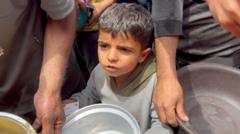
In a desperate scene unfolding in northern Gaza, six-year-old Ismail Abu Odeh shouted, "Give me some," as he sought food at a distribution point. Although he received a bowl of lentils that day, it was soon knocked from his hands, leaving him in tears as he returned to his family's tent. His uncle later managed to share some food with him, but the next day brought more disappointment as the displacement camp where Ismail lives, situated in a school in Gaza City, received no water or food deliveries, leaving everyone with empty containers.The BBC has reported on the unfolding humanitarian crisis in Gaza, where Israel has intensified military efforts while maintaining a 10-week-long blockade on essential supplies. With increasing warnings from organizations such as the United Nations, fears of famine loom large in the enclave.Despite the Israeli government claiming there is no food shortage, asserting that Hamas is hoarding aid, citizens describe their daily struggle to find sufficient meals. Food kitchens have shut down due to lack of supplies, and the existing markets only offer items at exorbitant prices that most cannot afford. One individual running a food kitchen admitted to operating on a "day by day" basis, constantly searching for food and cooking oil. A 23-year-old woman reported persistent dizziness and fatigue, symptoms of severe malnutrition.Adham al-Batrawi, a 31-year-old displaced from al-Zahra, shared innovative survival methods, stating, "We've invented ways to cook and eat that we never imagined we'd need," as he resorted to overcooked pasta fashioned into imitation bread. He lamented that his daily meal barely sufficed to sustain his energy.In another part of Gaza, Rewaa Mohsen, a nurse and mother of two, expressed worries about providing food and supplies for her daughters. Stocking up on items during a previous ceasefire wasn’t enough, and the sounds of nearby bombings have become a grim background to their day-to-day lives. Fearing for their safety, she described how evacuation orders compounded her anxiety as Israeli strikes targeted her area.As the situation grows dire, healthcare workers report the blockade's detrimental effects on medical supplies, with one nurse recalling the terror following an Israeli strike on the hospital where she worked. Reports indicate that hospitals struggle to maintain basic patient care amid persistent threats, and essential supplies are dwindling.The U.S. government is reportedly working on a new humanitarian aid delivery system through private entities in Gaza, an initiative criticized by the United Nations as a way of using aid as leverage in the conflict. As the humanitarian crisis deepens, Ismail's father outlined the heartbreaking reality: "My children go to sleep hungry. Sometimes I sit and cry like a little kid if I don't manage to provide food for them."