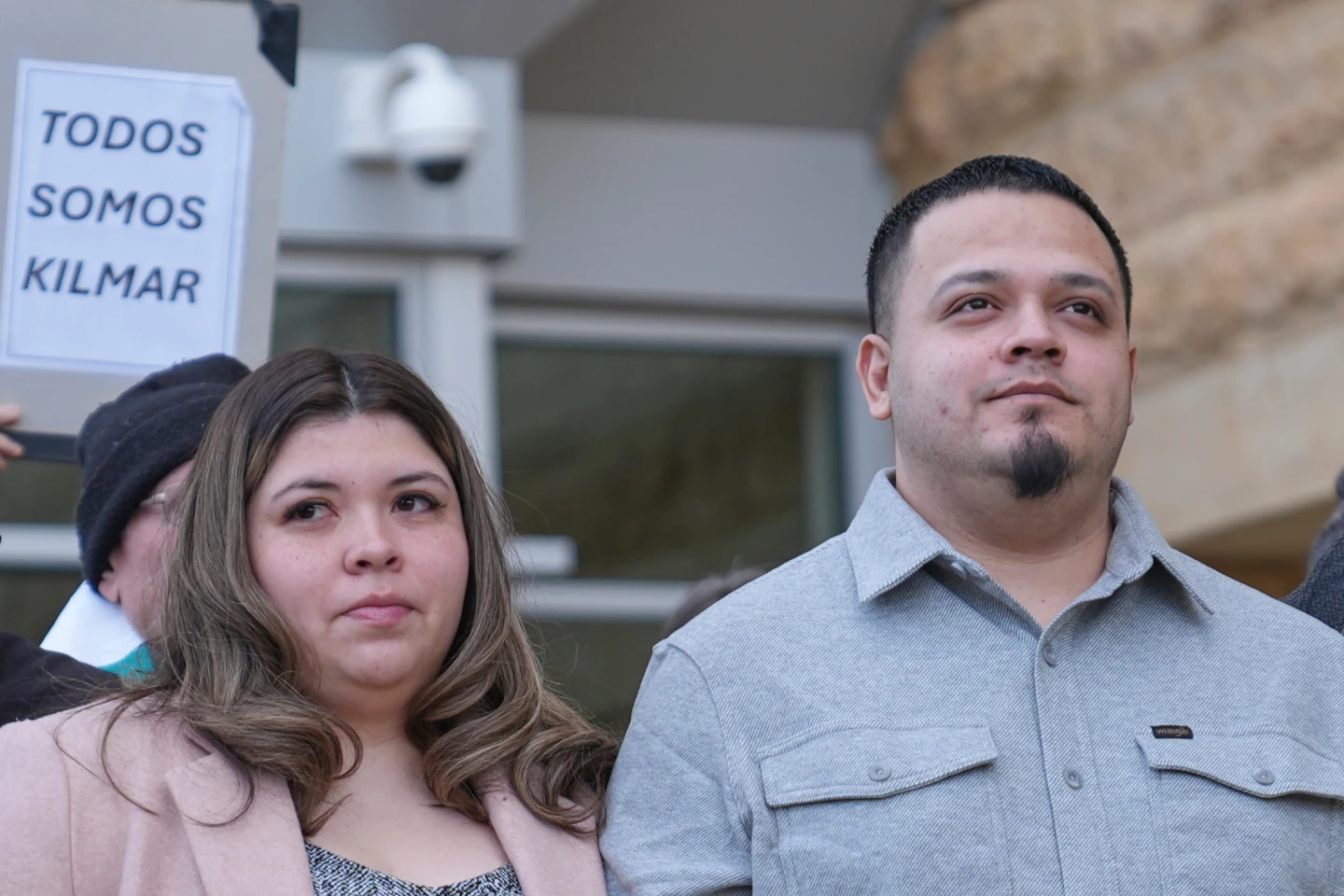
BALTIMORE (AP) — Kilmar Abrego Garcia can spend Christmas with his family after spending much of the year in custody. U.S. District Judge Paula Xinis, in Maryland, issued an order late on Monday requiring government attorneys to file a brief by Dec. 26 on whether they plan to take him back into immigration custody, and under what legal authority they would do so. His attorneys have until Dec. 30 to respond. A temporary restraining order that bars Immigration and Customs Enforcement from detaining him remains in place in the meantime.
“This decision means Kilmar gets to sleep in his own bed in the next coming days, without the fear of being separated from his family and community in the middle of the night,” Lydia Walther-Rodriguez, an organizer with the community group CASA, said in an email.
The Salvadoran citizen’s case has become a lightning rod for both sides of the immigration debate as he fights to remain in the U.S. after a mistaken deportation to his home country, where he was imprisoned. Members of President Donald Trump’s administration have accused him of being a member of the MS-13 gang, but he has vehemently denied the accusations and has no criminal record.
Abrego Garcia has an American wife and child and has lived in Maryland for years, but he immigrated to the U.S. illegally as a teenager. In 2019, an immigration judge granted him protection from being deported back to his home country, after concluding he faced danger there from a gang that targeted his family. In March, he was mistakenly deported to El Salvador anyway.
Facing mounting public pressure and a court order, Trump’s Republican administration brought him back to the U.S. in June, but only after issuing an arrest warrant on human smuggling charges in Tennessee. He has pleaded not guilty to those charges and asked the judge to dismiss them. Abrego Garcia was held in a Tennessee jail for two months before he was freed to await trial with his family in Maryland. However, he was only free for a weekend before ICE intervened. Trump administration officials have said he cannot stay in the U.S.
Over the past few months, government attorneys have threatened to deport him to Uganda, Eswatini, Ghana and, most recently, Liberia. However, officials have made no effort to deport him to Costa Rica, the one country he has agreed to go to. Xinis has even accused the government of misleading her by falsely claiming that Costa Rica was unwilling to take him. On Dec. 11, Xinis ordered him released from ICE custody, finding that the government had no viable plan to deport him anywhere and could not keep him in detention indefinitely.
“This decision means Kilmar gets to sleep in his own bed in the next coming days, without the fear of being separated from his family and community in the middle of the night,” Lydia Walther-Rodriguez, an organizer with the community group CASA, said in an email.
The Salvadoran citizen’s case has become a lightning rod for both sides of the immigration debate as he fights to remain in the U.S. after a mistaken deportation to his home country, where he was imprisoned. Members of President Donald Trump’s administration have accused him of being a member of the MS-13 gang, but he has vehemently denied the accusations and has no criminal record.
Abrego Garcia has an American wife and child and has lived in Maryland for years, but he immigrated to the U.S. illegally as a teenager. In 2019, an immigration judge granted him protection from being deported back to his home country, after concluding he faced danger there from a gang that targeted his family. In March, he was mistakenly deported to El Salvador anyway.
Facing mounting public pressure and a court order, Trump’s Republican administration brought him back to the U.S. in June, but only after issuing an arrest warrant on human smuggling charges in Tennessee. He has pleaded not guilty to those charges and asked the judge to dismiss them. Abrego Garcia was held in a Tennessee jail for two months before he was freed to await trial with his family in Maryland. However, he was only free for a weekend before ICE intervened. Trump administration officials have said he cannot stay in the U.S.
Over the past few months, government attorneys have threatened to deport him to Uganda, Eswatini, Ghana and, most recently, Liberia. However, officials have made no effort to deport him to Costa Rica, the one country he has agreed to go to. Xinis has even accused the government of misleading her by falsely claiming that Costa Rica was unwilling to take him. On Dec. 11, Xinis ordered him released from ICE custody, finding that the government had no viable plan to deport him anywhere and could not keep him in detention indefinitely.