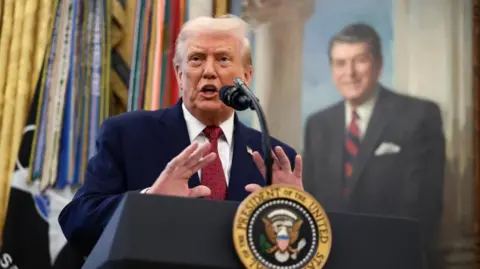
President Donald Trump has announced the expansion of a US travel ban that will prevent nationals from five additional countries and those traveling on Palestinian Authority-issued documents from entering the United States. This move, described by the White House as a measure to enhance national security, is set to take effect on January 1.
The countries now subject to full-entry restrictions are Burkina Faso, Mali, Niger, South Sudan, and Syria, alongside holders of Palestinian Authority passports. In addition, Laos and Sierra Leone are also transitioning from partial restrictions to a full ban, while partial restrictions will be applied to 15 other nations, including Nigeria, Tanzania, and Zimbabwe.
Trump's tightened immigration controls have been highlighted in light of recent incidents, including the arrest of an Afghan national alleged to have shot two National Guard troops during the Thanksgiving weekend. Administration officials pointed to systemic issues overseas, including high rates of visa overstays and lack of cooperation from deported nationals, as reasons for these expanded measures.
This marks the third occasion Trump has implemented a travel ban, having issued similar orders during his first term in 2017. The administration has emphasized that these restrictions will remain until affected nations demonstrate significant improvements in identity management and cooperation with US immigration authorities. However, exceptions exist for lawful permanent residents, existing visa holders, and dignitaries attending major international events.
As these new restrictions loom, many are anxious about the implications for international travel and relations, once again echoing the contentious debate surrounding Trump's immigration policies.