In brief
During Hurricane Milton, Babcock Ranch, a storm-resistant community in Florida, provided refuge for more than 2,000 people, highlighting its potential as a model for future urban planning.
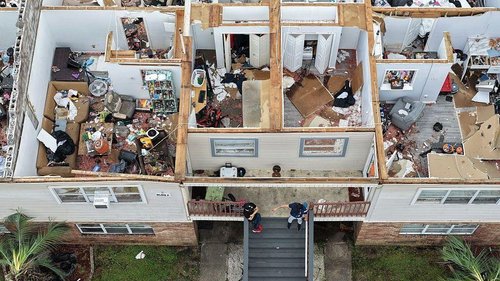
As the devastating Hurricane Milton surged onto Florida's west coast, Babcock Ranch, a resilient community designed to handle extreme weather, stood firm as a sanctuary for over 2,000 evacuees. Founded in 2018, the town, which spans an area comparable to Manhattan, offered refuge in its specially designed shelter buildings—a K-12 school accommodating 400 people and a large sports facility hosting 1,600 more residents—many of whom fled from the at-risk areas of Fort Myers. Syd Kitson, co-founder of Babcock Ranch, noted the influx of evacuees following Governor DeSantis' announcement, crediting the town with saving numerous lives. The town’s infrastructure is built to endure over 150-mile-per-hour winds, with a robust 150-megawatt solar energy system ensuring its power reliability amidst the storm. Additionally, the surrounding wetland, covering 90% of the property, effectively manages excess rainfall and minimizes flooding. Remarkably, despite the havoc wrought by Hurricane Milton, Babcock Ranch maintained electricity, with minimal damage limited to few downed trees and traffic lights. Kitson emphasized the importance of mitigating natural disaster risks to enhance community resilience, with Babcock Ranch standing as a testament to adaptive planning in the face of climate challenges. This model presents a promising direction for developing future hurricane-resistant communities across the storm-prone regions of the U.S.