In brief
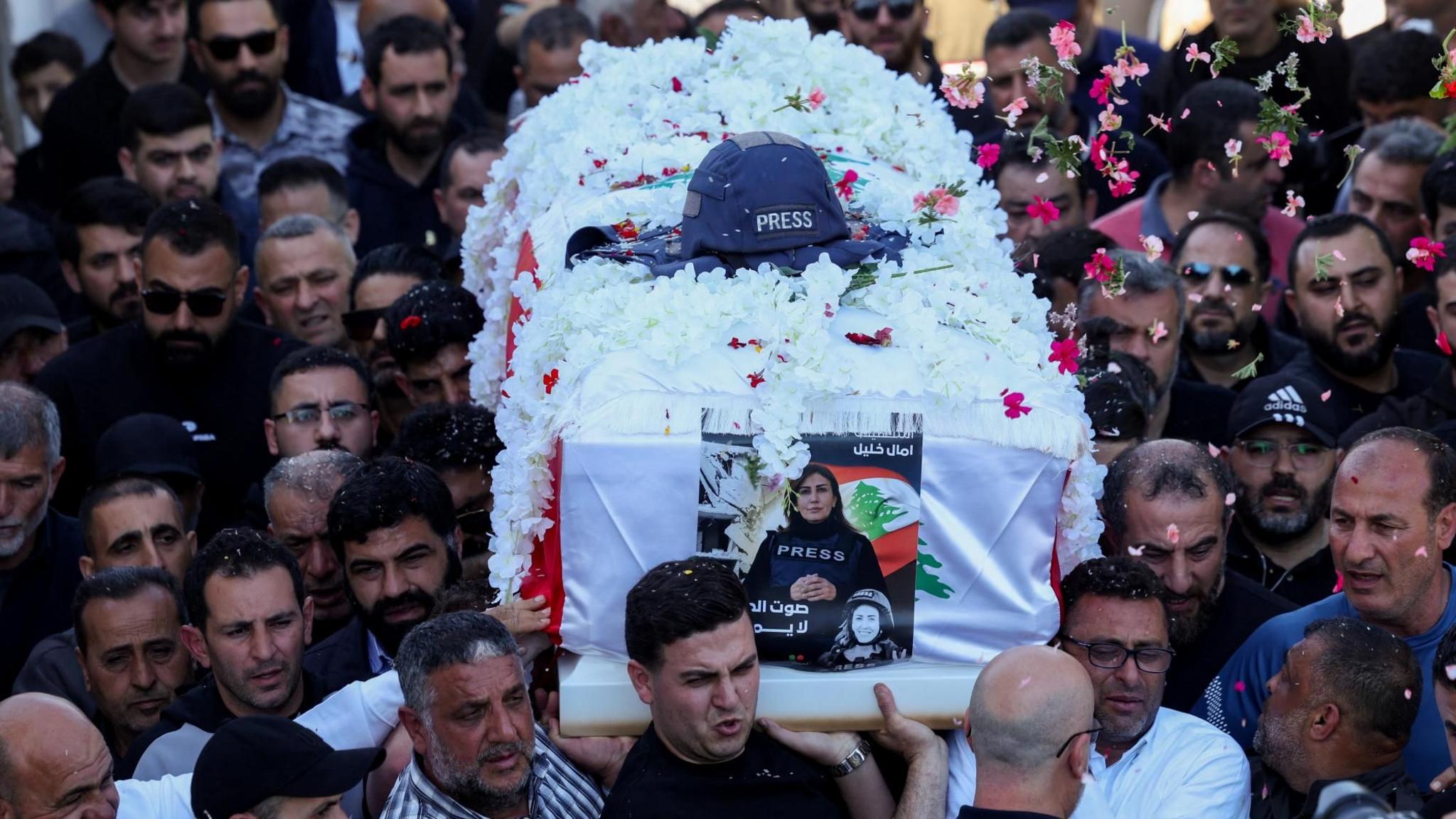
An Israeli air strike on 22 April in southern Lebanon killed Al‑Akhbar reporter Amal Khalil and badly injured freelance camerawoman Zeinab Faraj. Human Rights Watch and Amnesty International argue the attack targeted civilians and constitutes an apparent war crime, demanding an independent inquiry and ICC jurisdiction for Lebanon. Israeli forces deny targeting journalists, stating the strikes were aimed at Hezbollah operatives. Video and forensic evidence shows successive strikes and drone monitoring that threatened the journalists’ safety. The incident has added to the count of media workers killed in the region.
Human Rights Watch and Amnesty International have jointly condemned an Israeli strike in southern Lebanon that killed Al‑Akhbar reporter Amal Khalil and severely injured freelance camerawoman Zeinab Faraj. They argue the attack constituted an apparent war crime, calling for an independent investigation and urging Lebanon to accept the jurisdiction of the International Criminal Court.
The incident took place in the town of Al‑Tiri on 22 April. Separate findings by the two organisations reviewed video footage, witness accounts from Faraj, media reports, and a message from the Lebanese Red Cross to the Israeli military.
According to Human Rights Watch’s reconstruction, the first Israeli strike hit a car driven in front of the journalists at around 14:30 local time, killing two men they were acquainted with. This forced Khalil and Faraj to abandon their vehicle and seek shelter near a nearby building. At about 15:00, Unifil (the UN peacekeeping force in Lebanon) forwarded a request from the Lebanese Red Cross to the Israeli military to allow rescue operations.
A second strike, between 15:21 and 15:42, struck the parked car housing the journalists, injuring Khalil. They took shelter inside a building that was destroyed by a third strike at approximately 16:25.
Witnesses noted Israeli quadcopter drones hovered close to the journalists, reportedly coming within a meter of the broken roof and creating a visible threat to their safety. Faraj later recalled the drones’ presence: “The drones were hovering over us when we were inside. I was very concerned about a potential explosion.”
Phone records show Khalil remained in contact with emergency responders and family members as the attacks unfolded. A Lebanese Red Cross team was finally able to enter the town after 17:00 but was forced to retreat when a drone‑delivered stun grenade was fired at the rescuers. Photographs later revealed damage to the Red Cross ambulance consistent with small‑arms fire.
A hospital report from Tebnin Governmental Hospital indicated Khalil was likely still alive when paramedics withdrew at about 17:53. She later died around 19:00 due to cardiac arrest caused by a head injury that resulted in severe bleeding. The body was recovered around 23:00.
The Israeli military maintained that the strikes were part of a series of events aimed at two Hezbollah operatives and that they regret any harm caused to journalists. They also stated the incident was under internal review, though they did not clarify the purpose of the second and third strikes.
Both Human Rights Watch and Amnesty International highlighted that the evidence showed Israeli forces knew or should have known that the women were civilians. They underscored that deliberate attacks on civilians are prohibited under international humanitarian law. Heba Morayef, Amnesty’s Middle East director, said: “There can be no justification for targeting civilians who sought shelter.”
In a broader context, the Committee to Protect Journalists reports that 27 journalists and media workers have been killed this year, with nine in Lebanon and seven in Israel, the occupied West Bank and Gaza.