In brief
Israeli fighter jets struck Gaza City, Khan Younis and Deir el‑Balah, killing at least 13 people according to Palestinian officials. The attacks came a day after Hamas agreed to hand over its weapons to the Board of Peace, a U.S.‑backed entity. The Israel Defence Forces confirmed the deaths of two Hamas commanders and claimed the strikes targeted military operatives. Palestinian authorities also reported fatalities in residential buildings and houses across the strip. The episode underscores the fragile ceasefire still in place since last October.
At least 13 people, many of them children, were killed in fresh Israeli air strikes on Gaza in the last 24 hours, Palestinian officials have reported. The attacks hit Gaza City, Khan Younis and Deir el‑Balah, and marked the second night in a row of air raids.
The strikes followed a day when Hamas accepted a disarmament plan proposed by the U.S. Board of Peace, a body created under President Donald Trump’s strategy to stabilize the region. Israel’s forces say the drones targeted military operatives; two Hamas commanders – one from the elite Nukbha force and another from the Maghazi Battalion – were among those killed.
The Israeli Energy Minister Eli Cohen denied that a ceasefire deal had been reached that would halt attacks on Gaza, noting that the strip remains under about 70% Israeli control. He warned that more measures may be needed if Hamas does not relinquish its weapons, citing the planned withdrawal outlined by the Board of Peace.
In the latest raid, a house in Khan Younis was struck, killing a father, mother and their nine‑year‑old son. An apartment block in Deir el‑Balah was hit, fatality reports put two men dead; another person and a child were killed in a residential building in Gaza City. A further casualty was recorded near Jabalia in the north.
Since the ceasefire entered into effect last October, more than 1,100 Palestinians have lost their lives, according to Palestinian health authorities.
The Board of Peace’s disarmament roadmap remains unimplemented, but it states a process will start to inventory heavy weapons and military facilities, conditional on Israel honouring its commitments. The plan envisages storage of weapons in a neutral facility managed by a Palestinian national committee that Hamas has agreed to cede power to.
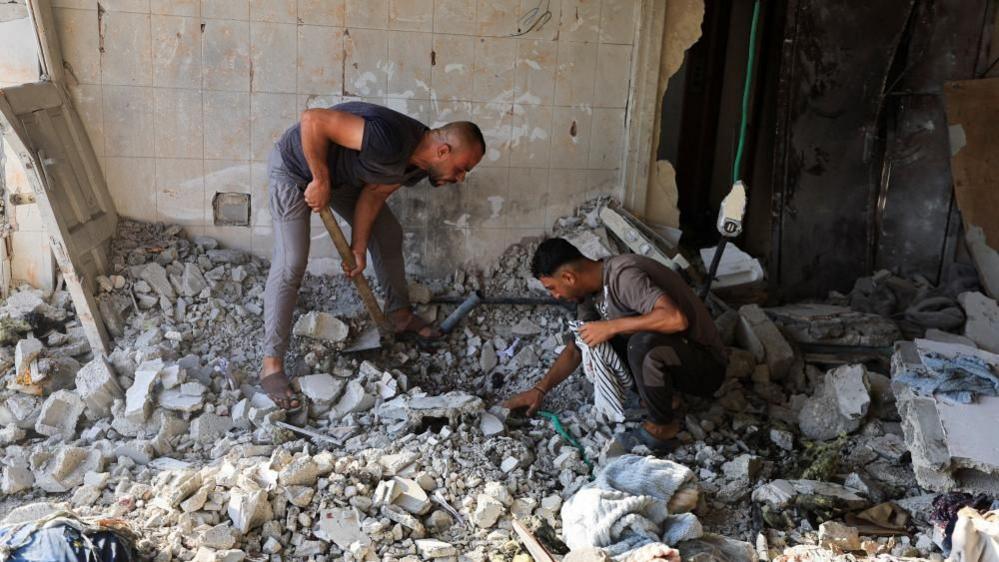
In the meantime, Israeli forces have destroyed over 1,500 buildings in areas still under Israeli control, and satellite imagery suggests the actual number of destroyed structures may be larger. The United Nations estimates that the war since October has generated around 60 million tonnes of debris.
For more context on the Board of Peace and the future of Gaza, see our related articles.